Restorations do not have a fixed expiry date
Assessment includes more than appearance: fractures, the fit of the margins, chewing function and the condition of nearby teeth and gums all matter. Restorations made at the same time may need different decisions if these conditions differ. Age is useful information, but cannot explain the need for replacement by itself.[1]
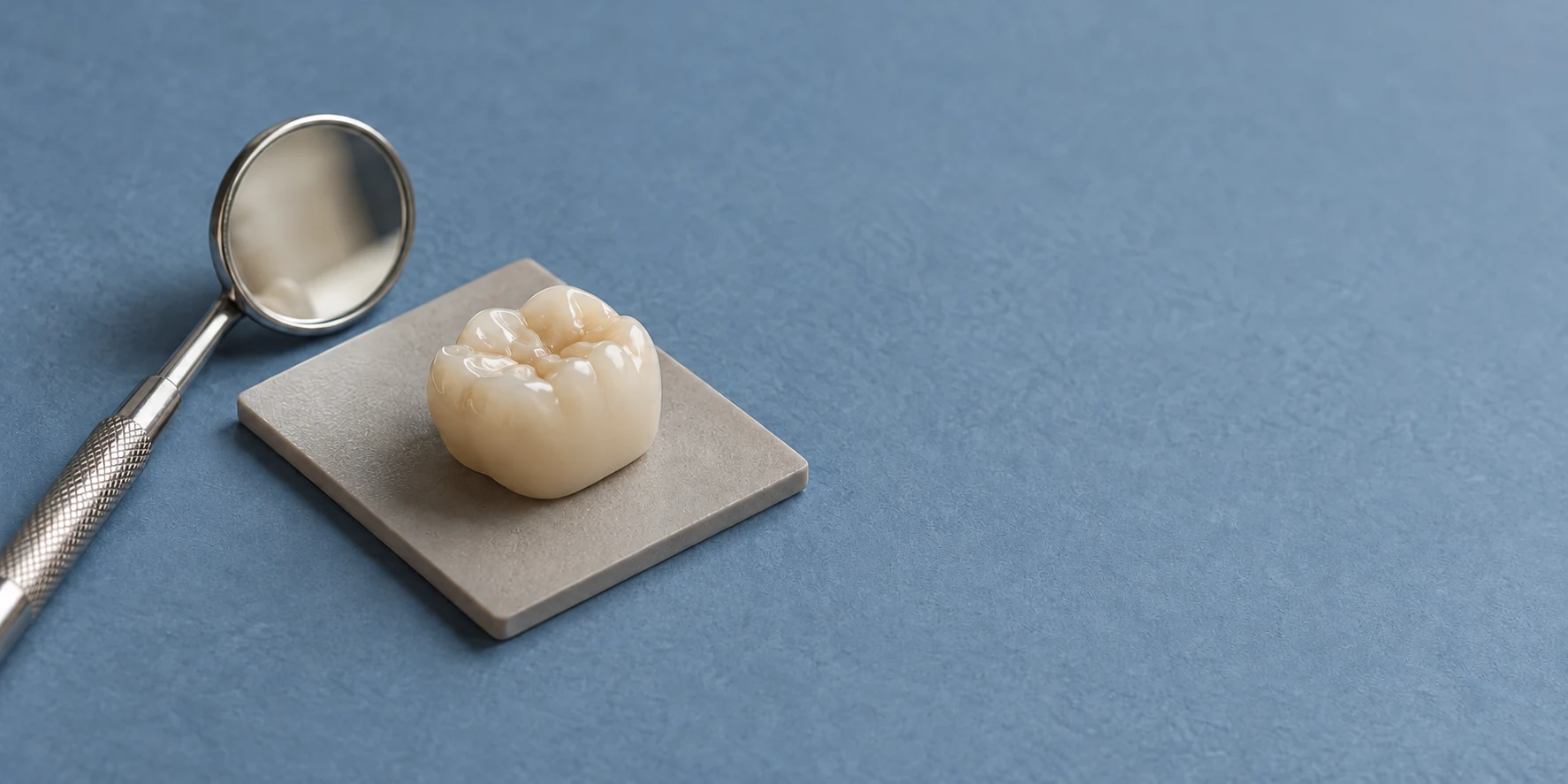
A crown covers and protects a weakened tooth while restoring its shape and function. Replacing it is therefore not simply about exchanging old for new. The central question is whether the current crown can continue to protect the tooth.[2]
Examine the restoration and the tooth underneath
Visible cracks or chips, an open margin and repeated food trapping offer clues. But a surface color change does not establish decay underneath, and lack of pain does not prove everything is healthy. Visual and tactile examination and appropriate X-rays are considered together.[1][3]
When discussing the findings, ask what comes after 'it is old.' Where exactly is the problem? Is the tooth damaged? What can be seen on the images, and what remains uncertain? Understanding the specific reason for treatment can reduce vague anxiety.
Consider polishing or repair before complete replacement
The FDI World Dental Federation suggests assessing whether a defective restoration can be repaired before replacing it completely. This may involve smoothing a rough surface or adding material to a small defect. Some problems can be addressed without removing all of the existing work.[3]
Repair options depend on the material, location of the defect and remaining tooth. Widespread damage or problems with the restoration's overall retention or function may make repair unsuitable. Even if a repair preserves more tooth structure, it is not necessarily the right choice in every case.[1][3]
Balance unnecessary replacement against leaving a real problem
Complete replacement requires removing the old material and fitting a new restoration. Additional healthy tooth structure may be lost in the process, so benefits and burdens need comparison. Equally, leaving a defect that needs treatment is not a way to protect the tooth.[3]
The revised FDI assessment criteria distinguish monitoring, refurbishment, repair and replacement according to condition. The choices are not limited to 'replace it now' or 'never replace it.' If monitoring is chosen, agree on which changes to look for and when to reassess.[1]
Three questions to ask at your consultation
First, what specific finding makes replacement advisable? Second, could repair or monitoring work, and if not, why not? Third, are there habits to change after treatment? Before comparing costs or material names, establish a shared understanding of the tooth's condition and the goal of treatment.[3]
Even a crown that is functioning well needs brushing, cleaning between teeth and regular checks. 'It is old but still healthy' is a meaningful check-up result too. Conversely, new difficulty chewing or a moving restoration should be reported rather than left until the next scheduled visit.[2]
Research and institutional sources
- Hickel R, et al. Revised FDI criteria for evaluating direct and indirect dental restorations—recommendations for its clinical use, interpretation, and reporting. Clin Oral Investig. 2023;27:2573–2592. doi:10.1007/s00784-022-04814-1.View source ↗Clinical assessment criteria distinguishing monitoring, repair and replacement.
- American Dental Association, MouthHealthy. Crowns.View source ↗ADA patient guidance on the purpose and maintenance of crowns.
- FDI World Dental Federation. Repair of Restorations. 2019.View source ↗FDI policy on individualized repair decisions and preserving tooth structure.
Bracketed numbers in the text link to these sources. This article provides general health information; individual diagnosis and treatment plans are determined after a clinical consultation.