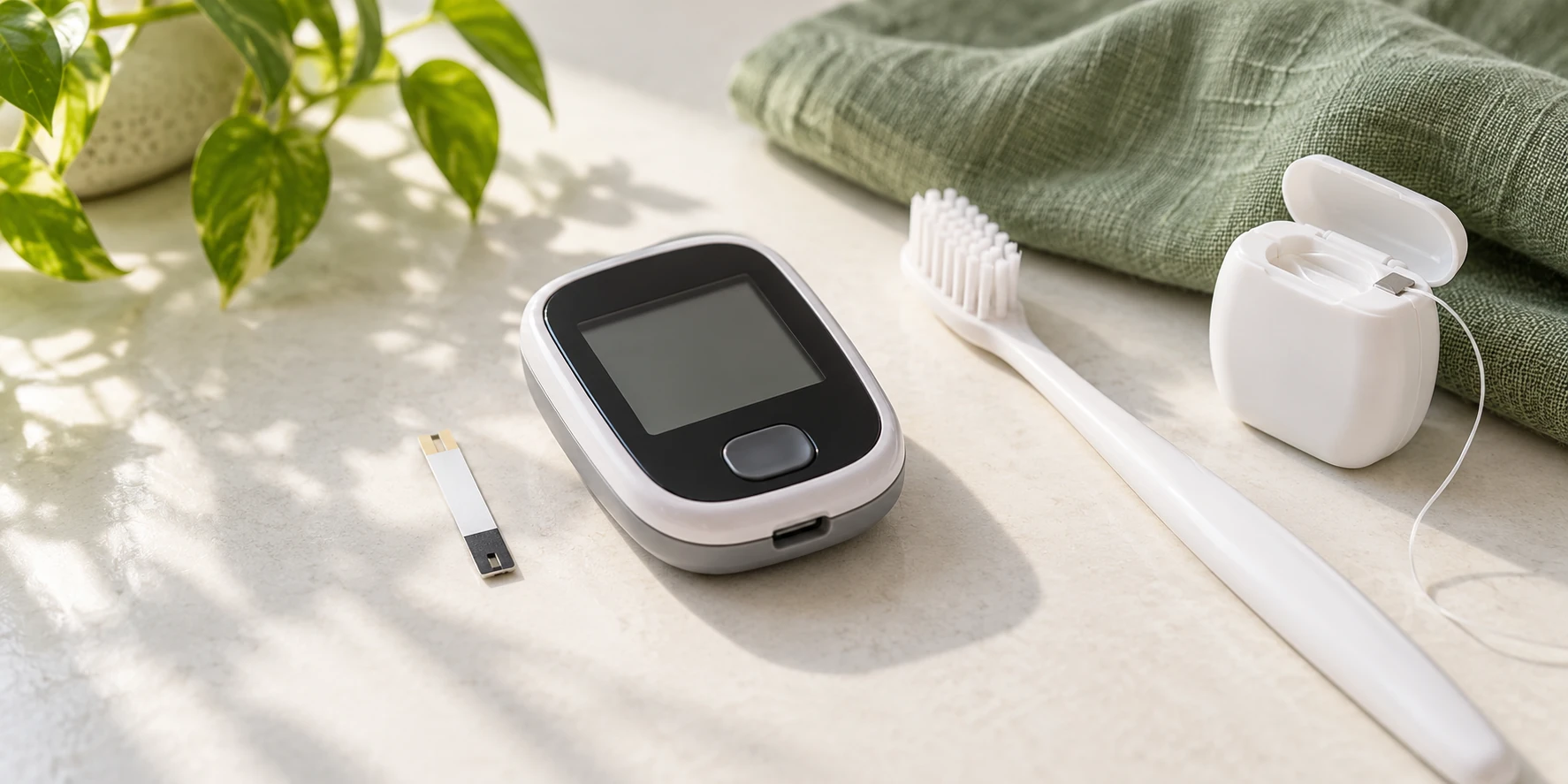
Higher blood sugar can change conditions in the mouth
Diabetes can affect saliva and gums. Periodontitis is gum disease that damages the tissues and bone supporting teeth. Reduced saliva or more glucose in saliva can make oral care more challenging, and high blood sugar increases the risk of more severe gum disease.[2]
Significant pain is not always present. If your gums swell or bleed, or spaces between teeth seem wider than before, “I can still chew” is not a good reason to put off a check.[3]
Can unhealthy gums make blood sugar harder to manage?
Periodontitis and diabetes are often described as having a two-way relationship. Diabetes can worsen gum health, while persistent gum inflammation may make blood sugar harder to control.[1]
That does not mean a rise in blood sugar can be attributed to the gums alone. Diet, physical activity, medication and other illnesses all contribute. A dental check is another part of the overall care plan. Gum findings alone cannot diagnose diabetes either.
What does a reduction of 0.43 percentage points mean?
HbA1c, or glycated hemoglobin, is a test that reflects average blood sugar over roughly the preceding three months. It is commonly used in diabetes management.
In 2022, Cochrane brought together studies of periodontal treatment in people with diabetes and periodontitis. Across 30 studies reporting results at three to four months, HbA1c was an average of 0.43 percentage points lower in the treated group than in groups receiving no active periodontal treatment or usual care. The researchers rated the evidence as moderate certainty: there is evidence of benefit, but uncertainty about the size of the effect remains.[1]
Average difference in HbA1c at 3–4 months after periodontal treatment
Participants: people with both diabetes and periodontitis
A percentage point is the difference between two percentage values. For example, 7.43% and 7.00% differ by 0.43 percentage points. This does not mean blood sugar fell by 43%, or that every treated person experienced the same reduction. HbA1c reflects blood sugar over several months; it is not the same test as a fasting glucose reading that morning.[1]
Why this is not the effect of one routine cleaning
The review mainly assessed treatment to remove bacterial deposits and tartar from below the gumline, technically called subgingival instrumentation. These were treatments for periodontitis, so the findings are not equivalent to the effect of a single routine scale and clean. Most participants had type 2 diabetes, and the results cannot simply be applied to people without diabetes.[1]
Continue your diet, exercise and prescribed medication plan even if you hope periodontal treatment will help. If blood sugar changes afterward, discuss it with the clinician managing your diabetes rather than changing medication or doses yourself. The extent of gum treatment and the timing of reassessment should also suit your condition.
Bring recent results and a medication list
Tell your dental team that you have diabetes and which medicines you take. Recent HbA1c results, episodes of low blood sugar, complications and other medical conditions can help with treatment planning. Check with the clinicians involved about eating and taking medication before and after dental treatment.[2]
- Keep a note of recurring bleeding, swelling and mouth sores that are slow to heal.
- Discuss a check-up interval suited to both your gum health and blood sugar management.
- Continue brushing with fluoride toothpaste and cleaning between teeth as part of daily care.[3]
Research and institutional sources
- Simpson TC, et al. Treatment of periodontitis for glycaemic control in people with diabetes mellitus. Cochrane Database of Systematic Reviews. 2022;4:CD004714. doi:10.1002/14651858.CD004714.pub4.View source ↗Systematic review: HbA1c outcomes at three to four months and the populations to whom the findings apply.
- National Institute of Diabetes and Digestive and Kidney Diseases (NIDDK). Diabetes, Gum Disease, & Other Dental Problems.View source ↗Public health information: blood sugar, oral health and preparing for dental care.
- National Institute of Dental and Craniofacial Research (NIDCR). Diabetes & Oral Health.View source ↗Public health information: symptoms and everyday care.
Bracketed numbers in the text link to these sources. This article provides general health information; individual diagnosis and treatment plans are determined after a clinical consultation.