Brushing both cleans and protects
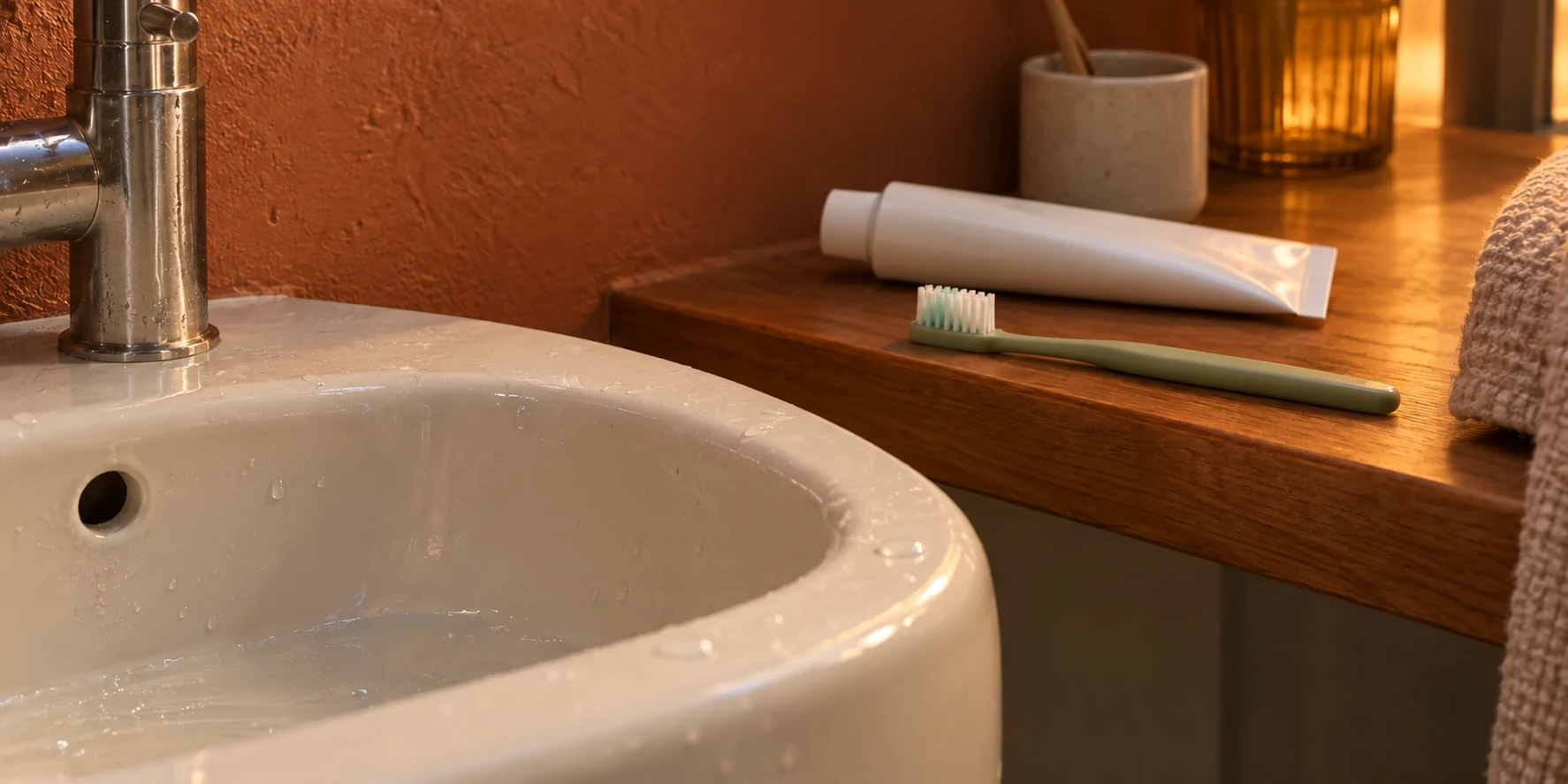
A toothbrush physically removes bacterial plaque from tooth surfaces and around the gumline. Fluoride toothpaste adds protection against decay. Fluoride helps the surface resist acid and supports replacement of minerals lost in the early stages of damage. That does not mean toothpaste can fill a deep cavity.[1][2]
More foam or a tingling mouth therefore does not prove better brushing. Thorough coverage and fluoride’s role both matter. How much toothpaste flavor remains is not a measure of how clean your teeth are.[1][2]
Repeated rinsing washes away remaining fluoride
The NHS advises spitting out excess fluoride toothpaste after brushing rather than rinsing with water straight away, because rinsing dilutes and washes away fluoride left around the teeth. Even a fluoride mouthwash used immediately afterward can wash away the toothpaste’s fluoride; the guidance suggests using it at another time.[3]
This does not mean that one rinse cancels the benefits of brushing. Cavities are not determined by a single day’s rinse count. The point is to keep brushing consistently and reconsider the habit of repeatedly washing everything away at the end.[1][3]
Evidence for fluoride is not a precise rinse-count formula
A 2019 Cochrane review brought together studies comparing toothpastes with different fluoride concentrations. It found evidence that fluoride toothpaste at certain concentrations prevents decay better than non-fluoride toothpaste, although not every comparison between concentrations was equally certain.[4]
That review cannot supply a figure for how much cavity risk rises if someone rinses three times. Comparing fluoride concentrations is a different research question from comparing rinsing habits. Use the established benefits of fluoride without promising effects the research did not measure.[4]
Spitting is different from swallowing
Reducing rinsing is not a reason to use more toothpaste or keep holding foam in your mouth. Toothpaste is not food and should not be swallowed. Children may swallow more even when using the same amount, so an adult should supervise and control how much is dispensed.[2]
The ADA advises a smear about the size of a grain of rice from the first tooth until age three, and a pea-sized amount for children aged three to six. These are general recommendations from an overseas professional association; the child’s age, decay risk, ability to spit and product directions also need consideration. The right amount and adult help take priority over simply copying an adult’s rinsing routine.[2]
The goal is not a perfect number of rinses
Start by checking whether your toothpaste contains fluoride and whether you reach the inner, outer and chewing surfaces. UK prevention guidance recommends brushing at least twice daily with fluoride toothpaste, including last thing before bed. A routine you can maintain is the foundation; fine-tuning the last step builds on it.[1]
If toothpaste causes burning or peeling, do not simply leave it in place and endure the irritation. Ingredients and other possible causes need assessment. If you have swallowing difficulties or use a prescribed toothpaste, follow your clinician’s individual directions rather than general advice.[1][2]
Research and institutional sources
- Department of Health and Social Care et al. Delivering better oral health: Chapter 8 — oral hygiene. Updated 2025.View source ↗Public health prevention guidance: fluoride toothpaste, plaque removal and individualized oral hygiene.
- American Dental Association. Toothpastes.View source ↗Professional clinical resource: fluoride, children’s toothpaste amounts and ingredient-related irritation.
- NHS. How to keep your teeth clean.View source ↗Public health patient information: spitting after brushing and the timing of water and mouthwash.
- Walsh T, et al. Fluoride toothpastes of different concentrations for preventing dental caries. Cochrane Database Syst Rev. 2019;3:CD007868. doi:10.1002/14651858.CD007868.pub3.View source ↗Systematic review: cavity prevention at different fluoride concentrations and limitations of comparative evidence.
Bracketed numbers in the text link to these sources. This article provides general health information; individual diagnosis and treatment plans are determined after a clinical consultation.