Passing through easily does not prove effective cleaning
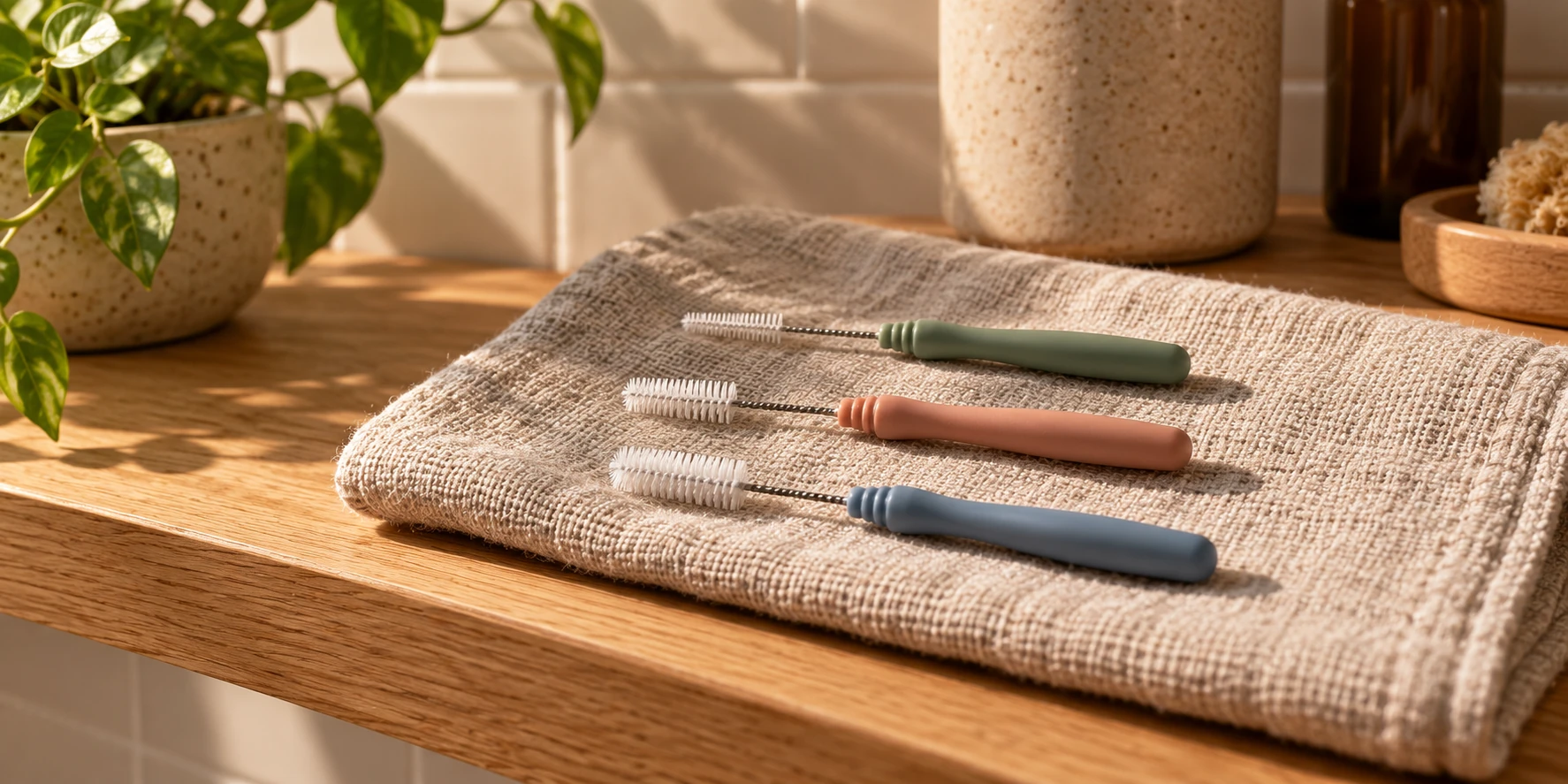
An interdental brush supplements a toothbrush in spaces the larger brush cannot easily reach. The NHS advises choosing a size that fits snugly between the teeth. A brush passing through very loosely does not, by itself, show that the area has been cleaned adequately.[1]
If you need considerable pressure to insert it, reconsider the size or angle. Pain is not a useful measure of thorough cleaning. Bringing your own brushes to a dental appointment makes it easier to check which spaces they suit.
Bristles should contact the surfaces without the wire scraping
Scottish dental guidance recommends a snug fit without the wire rubbing against the teeth. More than one size may be needed rather than expecting a single brush to suit every space.[2]
Keep a record of the product size and where you use it instead of remembering only the package color. Linking a brush to a specific location, such as a gap between lower right molars, can make the routine easier. Check the fit again when switching products.
There is no need to force a tight space open
For people with periodontitis, the same guidance recommends appropriately sized interdental brushes where space allows, and floss where a brush cannot fit. These tools can be used together in different parts of the mouth.[2]
Getting a large brush through a narrow gap should not become the goal. If the route is unclear or the brush catches near a restoration, ask the dental team to demonstrate an approach instead of applying more force. Choose a practical routine that also addresses the areas you find difficult to reach.
Research findings have limits
A 2019 Cochrane review found that adding interdental brushing to toothbrushing may reduce gum inflammation and plaque in the short term. However, the evidence was of low or very low certainty, and no included studies assessed tooth decay.[3]
That is not a basis for claiming that interdental brushes prevent every cavity or all gum disease. Comparing average outcomes across cleaning tools is also different from determining which size fits your own teeth. Checking how you use the tool is more practical than relying on a product ranking.
Bleeding is not a reason to stop automatically or scrub harder
Inflamed gums may bleed during cleaning, while an unsuitable tool or excessive force can also cause discomfort. Bleeding alone does not establish that the size is correct or that all interdental cleaning should stop. Gum health and technique need to be assessed together.[2]
Do not keep forcing a brush through a spot that produces sharp pain. Report persistent bleeding, swelling or soreness to the clinic. Choosing the right tool is a starting point; making sure you can actually use it comfortably helps the routine last.
Research and institutional sources
- NHS. How to keep your teeth clean.View source ↗Official patient guidance on interdental cleaning and brush fit.
- Scottish Dental Clinical Effectiveness Programme. Oral hygiene aids. Prevention and Treatment of Periodontal Diseases in Primary Care.View source ↗Clinical guidance on sizing, avoiding wire contact and using floss in narrow spaces.
- Worthington HV, MacDonald L, Poklepovic Pericic T, et al. Home use of interdental cleaning devices, in addition to toothbrushing, for preventing and controlling periodontal diseases and dental caries. Cochrane Database Syst Rev. 2019;4(4):CD012018. doi:10.1002/14651858.CD012018.pub2. PMID:30968949.View source ↗Systematic review with low- to very low-certainty short-term evidence; no included trials assessed caries.
Bracketed numbers in the text link to these sources. This article provides general health information; individual diagnosis and treatment plans are determined after a clinical consultation.