Small grooves can be difficult to clean
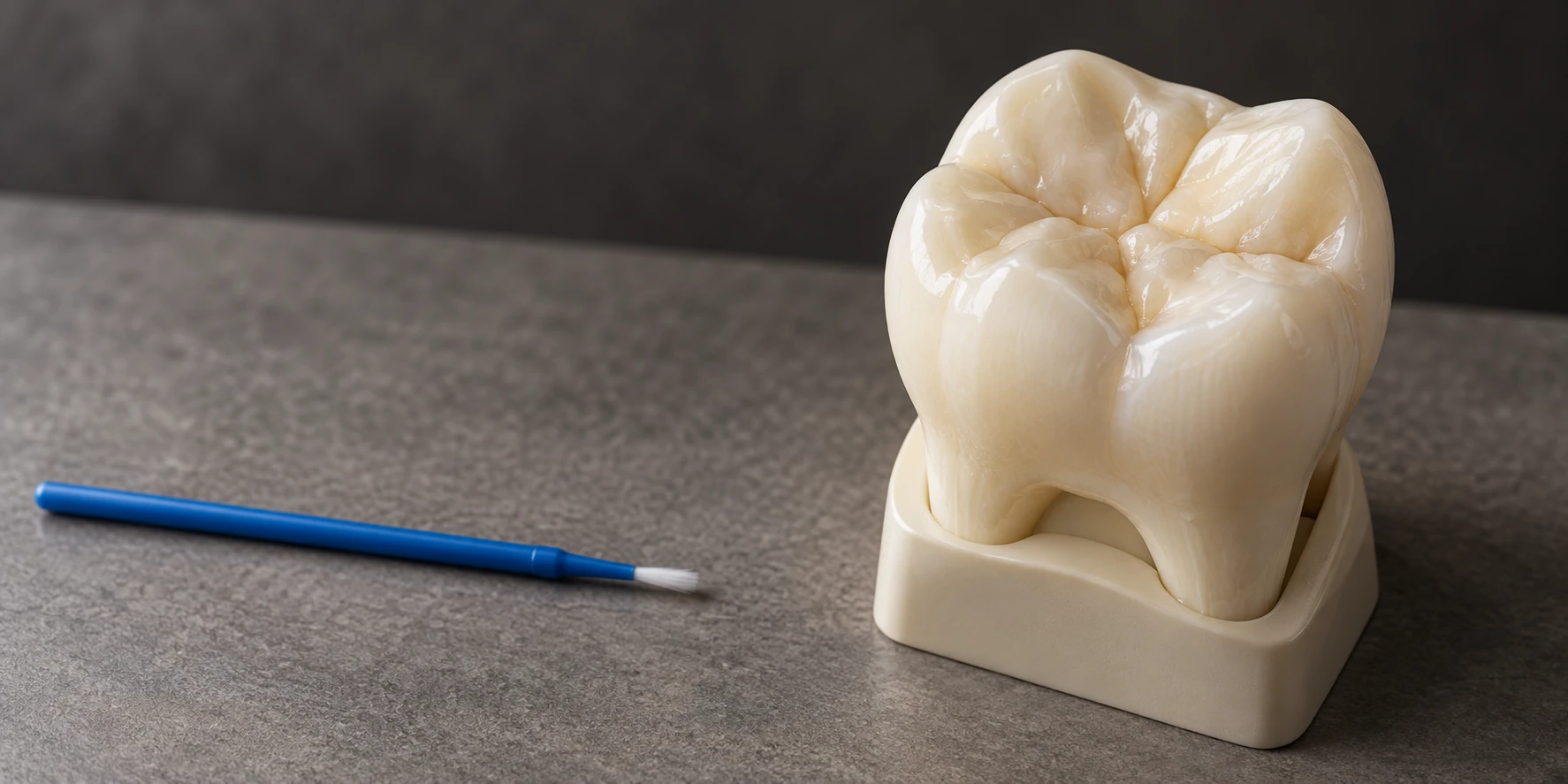
A molar has raised areas and narrow grooves that help it chew food. Debris and bacteria can remain in these recesses, beyond the reach of toothbrush bristles. Even a child who brushes diligently may have a groove that could benefit from protection.[1]
A sealant closes off those small recesses. It does not wrap every tooth in a thick shell. Understanding which surface needs protection makes the recommendation easier to assess.[2]
Why act before there is a cavity?
Prevention need not wait for pain. Research on sealants largely concerns permanent molars in children and adolescents. A Cochrane review found moderate-quality evidence that resin-based sealants reduced decay on chewing surfaces compared with no sealant.[3]
Evidence was not equally strong for every material. Longer-term data were more limited, and comparisons between different materials remained uncertain. This is evidence for prevention, not a promise of lifelong freedom from cavities.[3]
Sealing an early lesion is not hiding a large cavity
American Dental Association guidance supports considering sealants on healthy molar chewing surfaces and on certain early lesions in children and adolescents. The important distinction is whether the surface remains intact or has developed a hole.[2]
A dark spot in a photograph therefore does not automatically call for either a sealant or extensive drilling. The dentist assesses the surface and the extent of damage. A useful question is: “Is this to protect a healthy surface, or to stop an early lesion from progressing?”
Age is a starting point, not the whole decision
First permanent molars commonly appear around age six and second molars around age twelve. Their arrival is a useful opportunity for a check, but timing and tooth condition vary. If a tooth has not fully erupted, discuss when protection would be appropriate.[1]
Rather than assuming every molar needs treatment at a particular age, ask which tooth and surface would benefit. Groove shape, previous decay and day-to-day care help inform priorities. Insurance information in US sources does not describe Korean coverage rules.
Brushing and follow-up still matter
Sealants protect particular areas of the chewing surface. They do not clean between teeth or along the gumline. Twice-daily brushing with fluoride toothpaste and regular dental checks remain important.[1]
At follow-up, the sealant itself should also be checked. The useful question is whether it still protects the intended area, not simply whether one was placed years ago. Report an apparent loss or an uncomfortable bite rather than trying to adjust it yourself.
Research and institutional sources
- National Institute of Dental and Craniofacial Research. Dental Sealants. Reviewed September 2025.View source ↗Official patient information: protection of grooves, eruption and continued brushing.
- American Dental Association. Dental Sealants.View source ↗Professional guidance: sound and noncavitated molar surfaces in children and adolescents.
- Ahovuo-Saloranta A, Forss H, Walsh T, Nordblad A, Mäkelä M, Worthington HV. Pit and fissure sealants for preventing dental decay in permanent teeth. Cochrane Database Syst Rev. 2017;7:CD001830. doi:10.1002/14651858.CD001830.pub5. PMID:28759120.View source ↗Systematic review: preventive benefit and limitations of long-term and material comparisons. Indexed abstract checked; full-text access restricted.
Bracketed numbers in the text link to these sources. This article provides general health information; individual diagnosis and treatment plans are determined after a clinical consultation.