The nutrient and the ingredients carrying it are different things
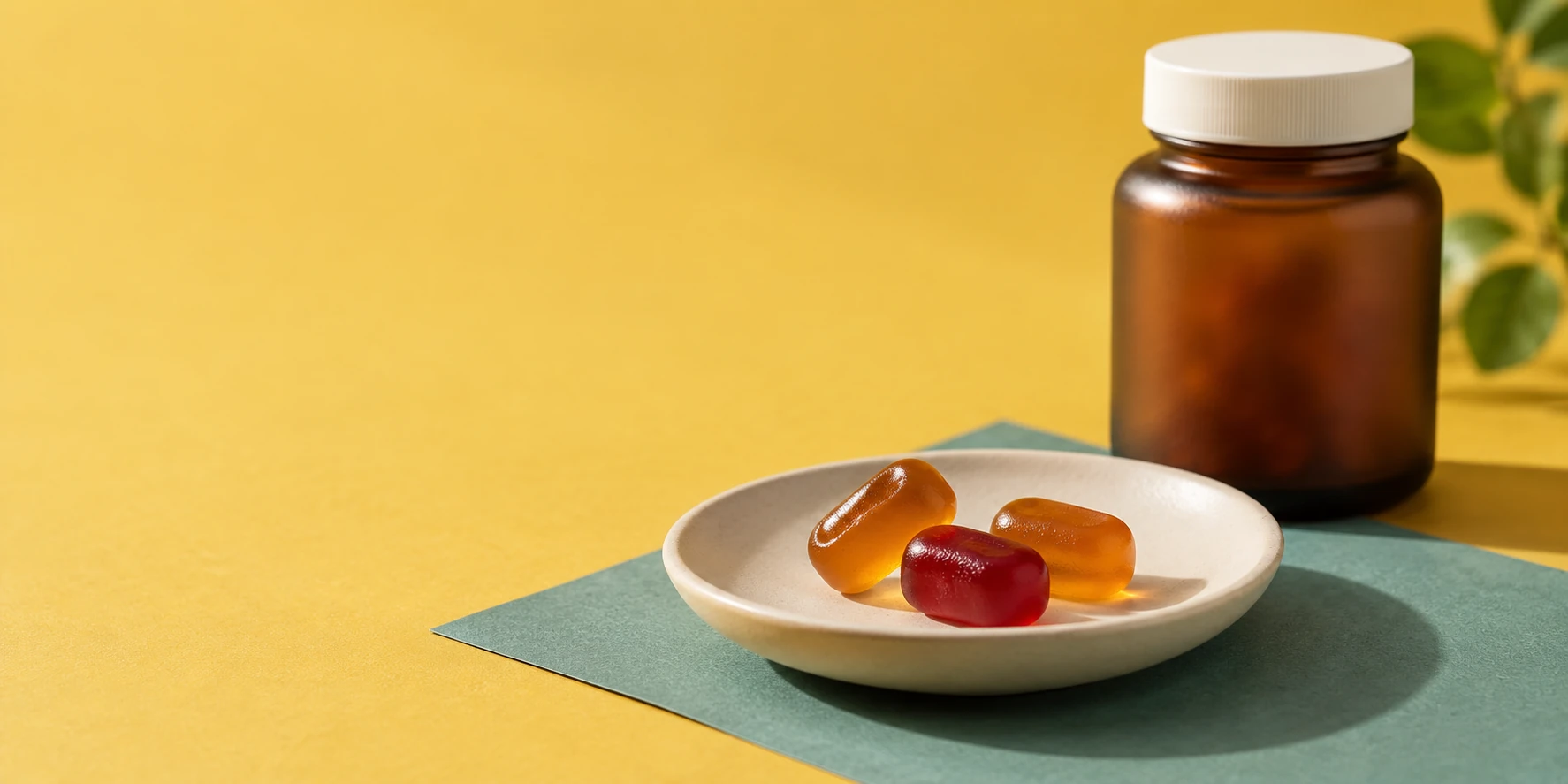
Vitamins are necessary nutrients, but products may contain other ingredients for taste and texture. Check for sugars, acidic flavoring ingredients and the number recommended per dose. Formulations and doses differ, so the name 'gummy' alone is not a useful comparison.[1]
For teeth, a nutrient claim is not enough information. ADA dietary advice includes gummy sweets and various chewable medicines or vitamins among forms that may stick to teeth. This does not mean all gummies have identical stickiness or decay-promoting potential.[2]
Less sugar does not settle the acid question
Sugar can fuel bacterial acid production, while a product's own acid can affect tooth surfaces without bacterial involvement. Decay and erosion share some lifestyle factors but are different processes. 'Sugar-free' or 'low sugar' does not mean acid has no effect.[3]
Slowly sucking sour products or dividing them into many occasions changes contact with teeth. Consider ingredients and eating patterns together rather than declaring a product dangerous from one ingredient alone. Notice whether you are eating gummies throughout the day simply because you see them as an alternative to candy.
What can chewable-vitamin research actually tell us?
A laboratory study of children's chewable vitamins found acidic solutions and potential enamel erosion among the products tested, with differences between products and mineral composition. It shows that chewable supplements can be one source of acid exposure.[4]
The study exposed tooth specimens to product solutions in a laboratory. It did not compare cavity development in children taking every type of gummy in daily life. The evidence cannot be translated into 'gummies cause cavities' or a number that is safe to consume.[4]
Check the dose before taking another
A supplement is not a snack, however good it tastes. Combining products can duplicate nutrients, and excess intake of some nutrients can cause harm. NIH guidance recommends checking nutrient amounts and their relationship to other products and medicines.[1]
For children, first check age suitability and whether supplementation is needed, and keep products out of reach. A caregiver should provide the intended amount. Rather than stopping a needed supplement because of dental concerns, ask a clinician or pharmacist about another formulation.[1]
Avoid treating it as a snack after bedtime brushing
Follow the product's instructions while avoiding gummies after the final brushing before bed. Use a defined dose and time rather than taking pieces throughout the day. Water afterward may help, but does not replace fluoride toothpaste or cleaning between teeth.[2][3]
If you have dry mouth, recurring cavities or braces that complicate cleaning, discuss the product and timing at an appointment. A photograph of the bottle or ingredient list makes advice more specific. The goal is to retain necessary supplementation while reducing avoidable oral exposure, not to ban all gummies.
Research and institutional sources
- NIH Office of Dietary Supplements. Multivitamin/mineral Supplements: Fact Sheet for Consumers.View source ↗NIH consumer guidance on ingredients, dosage and excessive intake.
- Mark AM. Good choices for healthy teeth. J Am Dent Assoc. 2024;155(12):1082. doi:10.1016/j.adaj.2024.10.008.View source ↗ADA patient information on sugars, retentive foods and chewable vitamins.
- American Dental Association. Dental Erosion.View source ↗ADA information on acid exposure and erosion.
- Lertsooksawat W, et al. Erosive potential of children's chewable vitamin supplements: An in vitro investigation. J Dent Res Dent Clin Dent Prospects. 2024;18(4):278–283.View source ↗Laboratory study of chewable vitamins; findings cannot be generalized to every gummy product.
Bracketed numbers in the text link to these sources. This article provides general health information; individual diagnosis and treatment plans are determined after a clinical consultation.