Why can damage look white rather than dark?
When enamel, the hard outer layer, loses minerals, the way light passes through and reflects from it changes. The area can look chalky and opaque. These are called white spot or demineralized lesions and can represent an early stage of decay.[1]
Braces do not themselves dye the teeth white. Brackets and wires make cleaning harder, allowing retained plaque to repeatedly expose enamel to bacterial acid. However, developmental differences in enamel can also create white marks, so a photograph alone cannot establish that decay developed during orthodontics.[1]
Will the spots disappear now the braces are off?
Removing appliances makes cleaning easier, but does not make every existing mark disappear. Early lesions may be managed to support mineral recovery and prevent progression, yet color changes can remain depending on depth and surface condition. Becoming less visible does not mean care is finished.[1]
A dentist checks for roughness or surface breakdown, whether the damage is still progressing, and whether the mark has another cause. Stopping disease progression and making the color match the neighboring teeth are different goals. They do not always require the same treatment.
Fluoride matters, but it is not an eraser for every spot
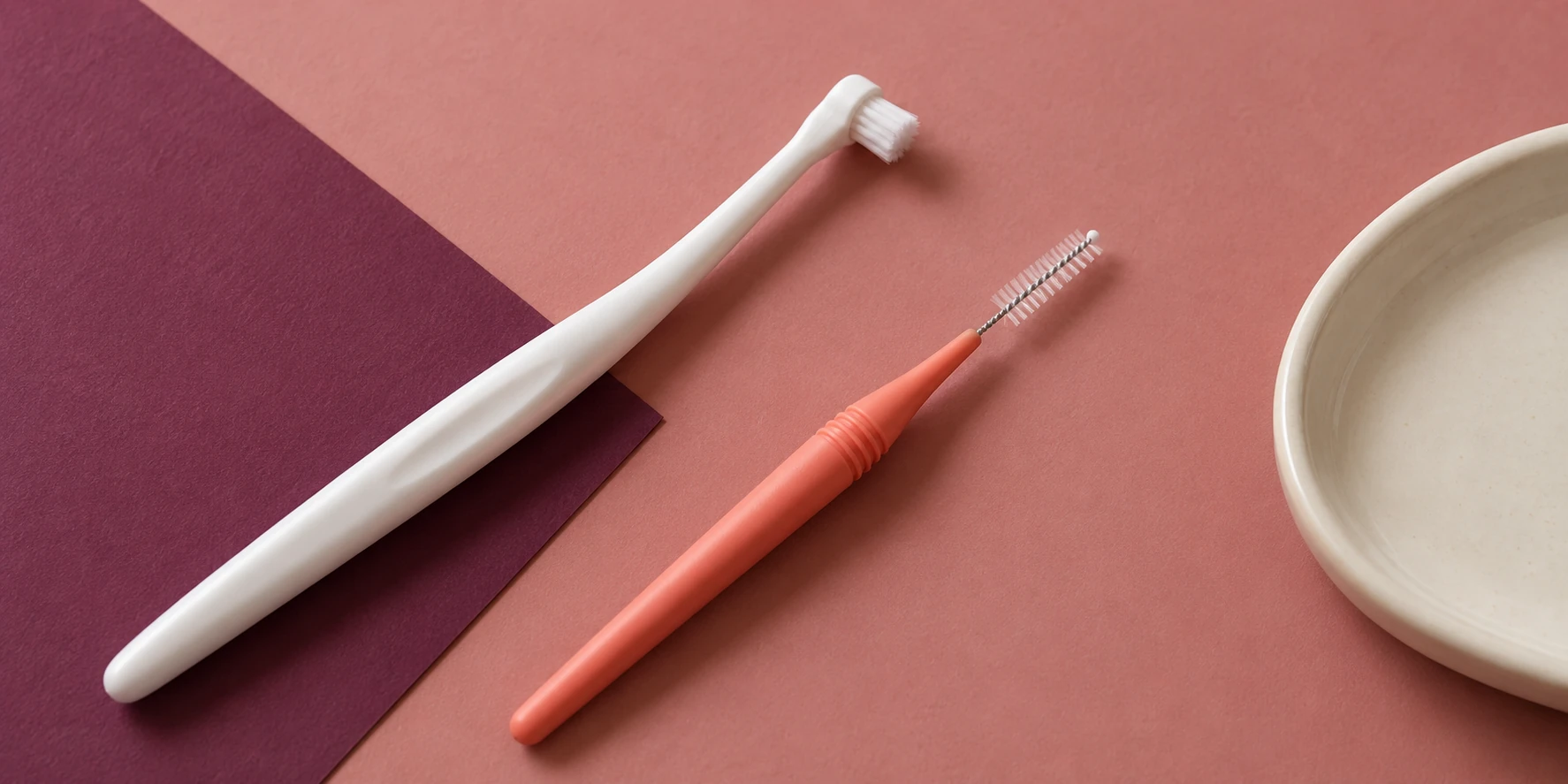
Brushing with fluoride toothpaste and additional fluoride when indicated are important preventive measures. During orthodontics, check access above and below brackets and along the gumline, and learn suitable tools such as interdental brushes. Teeth and gums also need regular checks alongside orthodontic visits.[2]
A Cochrane review of fluoride methods for preventing demineralization with fixed braces found possible benefits from some approaches, but insufficient clear evidence on optimal concentration and frequency. Seek age- and risk-appropriate advice rather than adding high-strength products yourself.[3]
Look for missed areas, not just the number of brushings
Even frequent brushing can leave plaque in the same places around brackets. Use a mirror to check where the bristles actually reach. Coverage matters more than excessive force, and a water flosser should not replace basic brushing.[1][2]
Frequent sipping of sweet drinks also needs attention. Clear aligners are not exempt from oral care: drinking anything other than water while wearing them, or replacing them over food debris, can create problems. Follow the eating and cleaning instructions for your appliance.[1]
What can be done for marks that remain?
After stabilizing the lesion, persistent cosmetic concerns may be addressed with suitable options such as resin infiltration, microabrasion or restoration. Resin infiltration introduces material into microscopic spaces to reduce differences in light behavior; a systematic review assessed its potential to improve white-spot appearance.[4]
Results cannot be guaranteed across every depth and cause. Whitening can change the surrounding color and therefore the contrast, making treatment order important. Avoid hard scrubbing or acidic remedies. Discuss both how much tooth structure can be preserved and the realistic degree of improvement.[4]
Research and institutional sources
- American Association of Orthodontists. Do Braces Cause White Spots on Teeth? 2026.View source ↗Specialist society information on white spot causes and daily care.
- British Orthodontic Society. The Role of the Orthodontist in Maintaining Oral Health. 2024.View source ↗Orthodontic society guidance on hygiene and fluoride during treatment.
- Benson PE, et al. Fluorides for preventing early tooth decay (demineralised lesions) during fixed brace treatment. Cochrane Database Syst Rev. 2019;11:CD003809.View source ↗Systematic review of fluoride prevention methods and evidence limitations.
- Bourouni S, Dritsas K, Kloukos D, Wierichs RJ. Efficacy of resin infiltration to mask post-orthodontic or non-post-orthodontic white spot lesions or fluorosis—a systematic review and meta-analysis. Clin Oral Investig. 2021;25(8):4711–4719. doi:10.1007/s00784-021-03931-7.View source ↗Systematic review of resin infiltration for improving the appearance of white lesions.
Bracketed numbers in the text link to these sources. This article provides general health information; individual diagnosis and treatment plans are determined after a clinical consultation.