A drink can affect teeth without tasting sweet
Tooth decay involves acids produced when bacteria use sugars. Erosion, by contrast, occurs when acids that do not come from bacteria—such as those in drinks or stomach acid—dissolve hard components of the tooth surface. An 'unsweetened' label therefore says little about the effect of acid.[1]
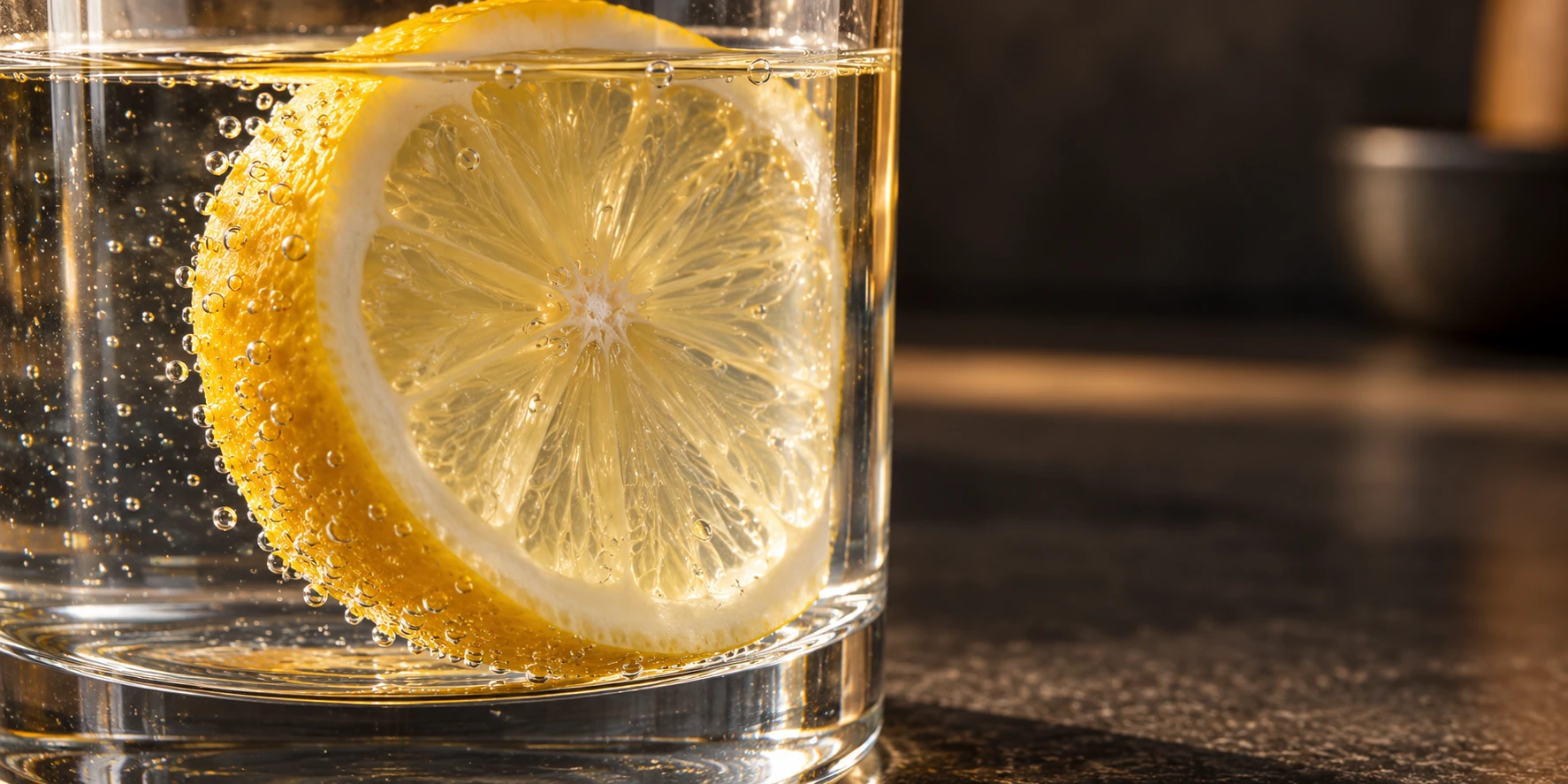
Lemon's organic acids do not disappear when added to water. The Australian Dental Association explains that adding citrus such as lemon or lime can increase water's acidity. One glass does not automatically mean visible damage; the concern is the conditions under which exposure is repeated.[2]
Does using only a little lemon make it safe?
Dilution changes concentration, but there is no universal number of slices that is safe for everyone. Acidity, the amount of neutralization required, components such as calcium and time in the mouth all matter. How sour a drink tastes at home cannot precisely predict its effect on teeth.[3]
Saliva helps dilute, buffer and clear acid. Frequent dry mouth, existing wear or acid reflux can change what needs consideration even with the same drink. If sensitivity develops, look beyond simply using less lemon and consider these background factors.[1][3]
Laboratory findings do not predict your teeth's future
Experimental comparisons of acidic drinks found different amounts of damage to tooth specimens, with lemon juice among the drinks tested. Such studies help explain how acidic beverages can affect dental tissues.[4]
Immersing tooth samples under controlled conditions does not reproduce saliva, swallowing, meals and breaks in a real mouth. Results from concentrated juice cannot be transferred to a glass of diluted lemon water to claim that teeth dissolve within a set number of days. Understand the possibility and adjust habits without being frightened by exaggerated figures.[4]
Distinguish a drink with a meal from an all-day water substitute
Having lemon water with a meal differs from sipping it from a large tumbler throughout work. Avoid holding or swishing acidic drinks around the mouth, and use plain water for routine thirst to reduce acid exposure.[2][3]
A straw does not eliminate all contact with teeth. A light rinse with water afterward can be useful, but it does not make continuous acidic drinking harmless. Keep regular brushing with fluoride toothpaste and a gentle technique.[1][2]
No sensitivity does not necessarily mean no wear
Erosion or tooth wear can initially progress without obvious pain. Conversely, sensitivity is not always caused by lemon water. Recession, decay, cracks and other causes need assessment alongside surface changes.[1]
At an appointment, 'I sip lemon water all afternoon' is more useful than 'I drink lots of water.' Lost tooth shape does not grow back by itself, but addressing the causes and planning care suited to your condition can help limit further progression.[1][3]
Research and institutional sources
- American Dental Association. Dental Erosion.View source ↗ADA information on the causes and assessment of erosion.
- Australian Dental Association. Tooth erosion.View source ↗Australian Dental Association advice on citrus-infused water and daily care.
- Department of Health and Social Care et al. Delivering better oral health: Chapter 7, tooth wear. 2025.View source ↗Public health guidance on acid exposure, saliva and limitations in prevention evidence.
- Zimmer S, et al. Influence of Various Acidic Beverages on Tooth Erosion. Evaluation by a New Method. PLoS One. 2015;10(6):e0129462.View source ↗Laboratory study whose findings cannot be directly converted into risk from drinking diluted lemon water.
Bracketed numbers in the text link to these sources. This article provides general health information; individual diagnosis and treatment plans are determined after a clinical consultation.