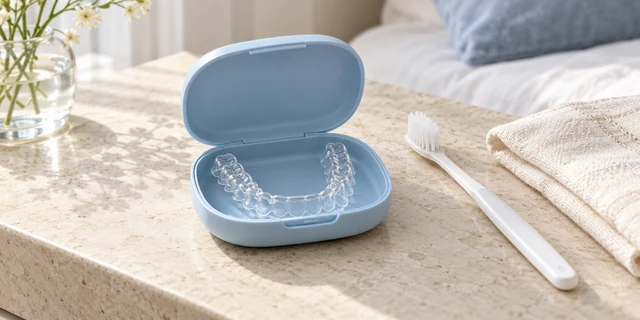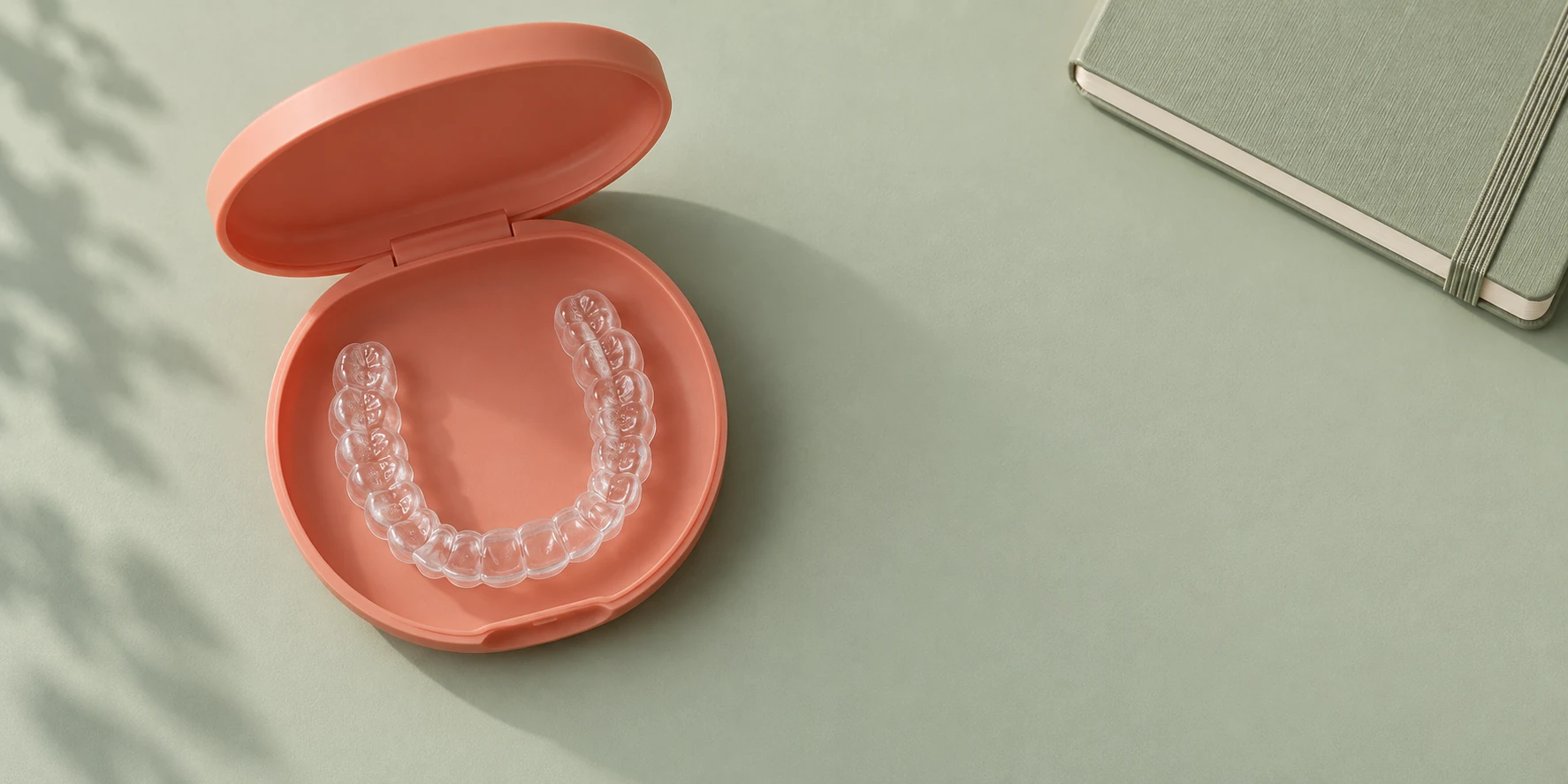
Aligners move teeth; retainers maintain their position after treatment
Clear aligner treatment uses a sequence of slightly different trays to move teeth towards planned positions. A retainer helps hold the result after treatment. The British Orthodontic Society explains that retention is still needed after aligner treatment.[1]
When a friend says they wear an appliance only at night, first ask whether they are at the same stage. A retention schedule may differ from an active-treatment schedule. Clear plastic alone does not tell you how an appliance should be used.
Night-only wear leaves out the daytime hours
The British Orthodontic Society’s patient leaflet advises wearing active aligners except for eating, cleaning and drinking anything other than plain water. It specifies more than 22 hours a day. Follow the schedule prescribed for your own treatment.[2]
The point is not to declare success or failure based on a single hour. It is not to turn a treatment planned for most of the day into a night-only routine on your own. If work makes wear difficult, discuss your schedule and treatment options before starting.
Research on change intervals does not establish daily wear time
A 2024 systematic review compared protocols involving tray changes every 7, 10 or 14 days. Some movements performed better with longer intervals, and the certainty of evidence for tooth-movement effectiveness was rated very low.[3]
The central question was how many days each tray should be used. This did not establish that daily wear could be reduced to nighttime alone. Shorter intervals between trays do not automatically permit fewer hours of wear each day.[3]
If the next tray does not fit, the calendar is not enough
Tell your dental team if a tray does not fit properly or you have frequently missed wear, even when the scheduled change date has arrived. Do not compensate by forcing in the next tray or skipping stages. The next step depends on the current tooth positions and fit.
Mild discomfort can occur when starting a new tray. Severe pain or gum injury should not be endured as proof that treatment is working. Note the tray number, your actual wear and where the discomfort occurs so you can explain the problem.[2]
An honest wear record helps keep the plan realistic
Saying “I could not wear them enough this week” provides useful information. It is better than reporting perfect wear while continuing with poorly fitting trays. Do not invent a formula to turn missed hours into a new change date.
Cleaning and check-ups matter alongside wear time. Orthodontic treatment does not exempt teeth from decay or gums from inflammation. NHS guidance recommends continuing regular dental checks and careful cleaning throughout orthodontic treatment.[4]
Research and institutional sources
- British Orthodontic Society. Clear aligners.View source ↗Professional guidance on sequential movement, full-time wear and retention.
- British Orthodontic Society. Aligners: Patient Information Leaflet. 2024 version.View source ↗Patient leaflet on daily wear, removal, discomfort and care.
- Monisha J, Peter E. Efficacy of clear aligner wear protocols in orthodontic tooth movement—a systematic review. Eur J Orthod. 2024;46(3):cjae020. doi:10.1093/ejo/cjae020. PMID:38666743.View source ↗Systematic review of tray-change intervals, not evidence for night-only wear. Indexed abstract and publisher content cross-checked.
- NHS. Braces. Reviewed 29 June 2026.View source ↗Official patient guidance on cleaning and routine dental checks during orthodontic treatment.
Bracketed numbers in the text link to these sources. This article provides general health information; individual diagnosis and treatment plans are determined after a clinical consultation.