Even a small bite starts another episode
Bacteria on tooth surfaces use sugar from food to make acid. Minerals can then leave the hard outer surface of the tooth. Saliva helps buffer the acid and supplies minerals, while fluoride supports the repair of early damage.[1]
Eating sugary foods at short intervals repeatedly renews acid exposure. UK prevention guidance explains that this frequency affects opportunities for the tooth surface to recover. Even when portions are small, a day with almost no breaks from eating or drinking is worth reviewing.[2]
So should you eat the whole packet at once?
That is not the conclusion. A systematic review of sugar intake and decay supports the importance of reducing the amount consumed. Keeping a high intake—or increasing it—while reducing the number of occasions does not solve the problem.[3]
In everyday life, people who consume more sugar may also consume it more often. The American Dental Association notes that amount and frequency are intertwined, making their independent effects difficult to separate. This is not a choice between controlling quantity or frequency: both deserve attention.[4]
Record the things you do not think of as snacks
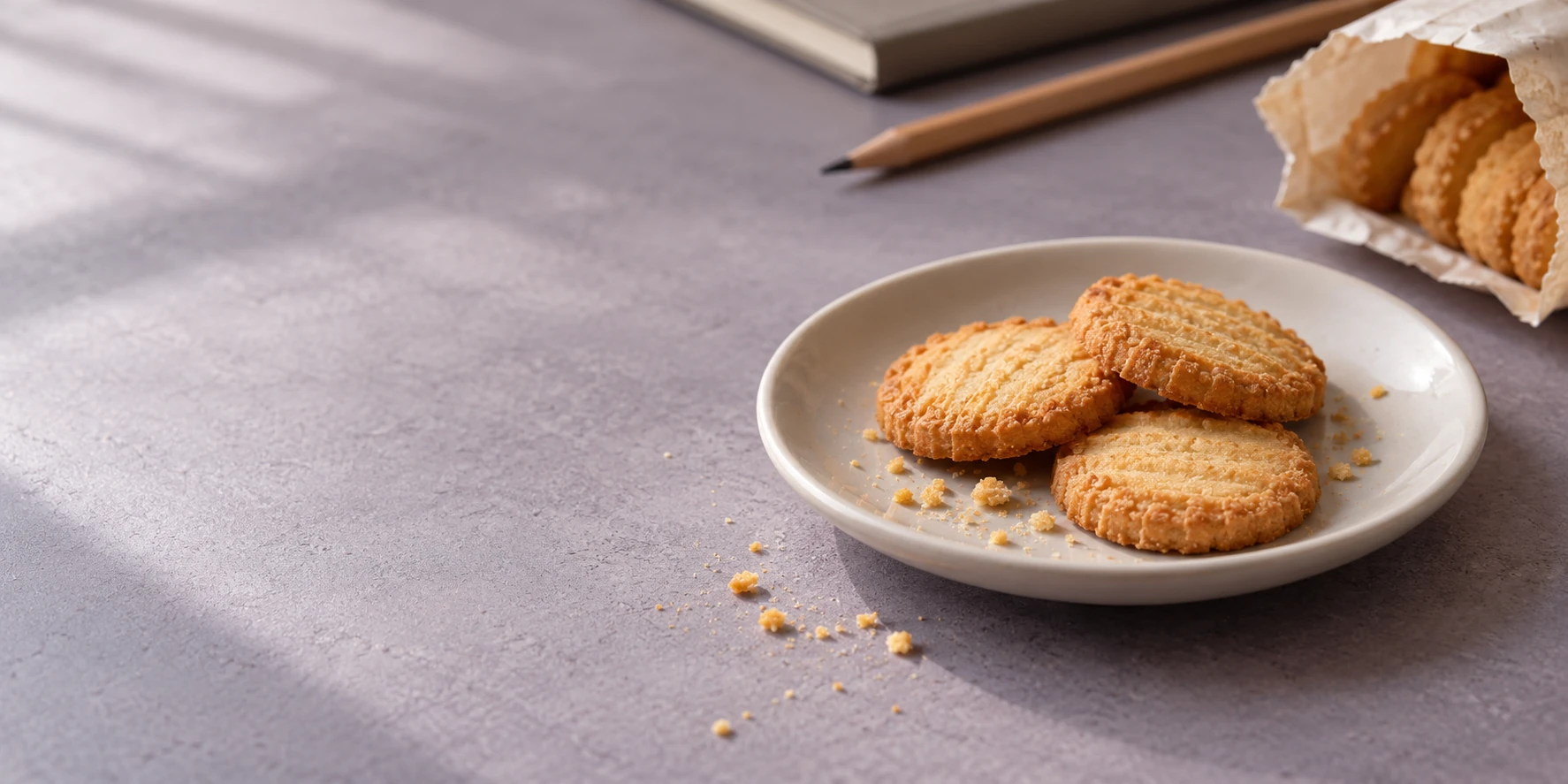
Include sweet coffee between meetings, a sweet taken out of boredom and biscuits picked up from the table. Even without a formal snack break, these small intakes may occur many times a day. Briefly noting the actual times can be easier than trying to count from memory.
UK prevention guidance advises reducing the amount and frequency of sugary foods and drinks and having them with meals. This is not a direction to restrict every food in the same way. People who need snacks for growth or health reasons should maintain adequate nutrition while adjusting food choices and timing.[2][4]
The same habit may be harder on a dry mouth
Insufficient saliva reduces protection after acid exposure. If dryness makes you repeatedly reach for sugary sweets or drinks, consider dryness and sugar intake together. Reduced saliva flow during sleep is another reason to review nighttime eating habits.[1][2]
Water is a basic choice for thirst, but one sip cannot erase the effects of all-day snacking. Fluoride toothpaste, cleaning between teeth and finding the cause of dry mouth matter too. If you are developing more cavities than usual, mention medicines and dryness alongside snacks.[1][4]
Tomorrow, give your snack a finishing point
Instead of keeping a packet open while you work, set aside a portion, eat it at a chosen time and put it away afterward. Apply the same reflection to slowly sipping a sweet drink all day. Start by noticing one automatic habit rather than attempting a complete dietary overhaul.
It is not possible to promise that such a change reduces decay by the same numerical amount for everyone. Fluoride use, hygiene, saliva and existing tooth conditions also contribute. Adding frequency to a record that previously considered only quantity can reveal opportunities you had overlooked.[1][3]
Research and institutional sources
- NIDCR. The Tooth Decay Process: How to Reverse It and Avoid a Cavity.View source ↗NIDCR explanation of acid exposure and the roles of saliva and fluoride.
- UK Government. Delivering better oral health, Chapter 10: healthier eating.View source ↗UK prevention guidance on sugar frequency and mealtimes.
- Moynihan PJ, Kelly SA. Effect on Caries of Restricting Sugars Intake: Systematic Review to Inform WHO Guidelines. J Dent Res. 2014;93(1):8–18.View source ↗Systematic review of total sugar intake and tooth decay.
- American Dental Association. Nutrition and Oral Health.View source ↗ADA guidance on diet and interpreting evidence about amount and frequency.
Bracketed numbers in the text link to these sources. This article provides general health information; individual diagnosis and treatment plans are determined after a clinical consultation.