Food names alone cannot rank what is best for teeth
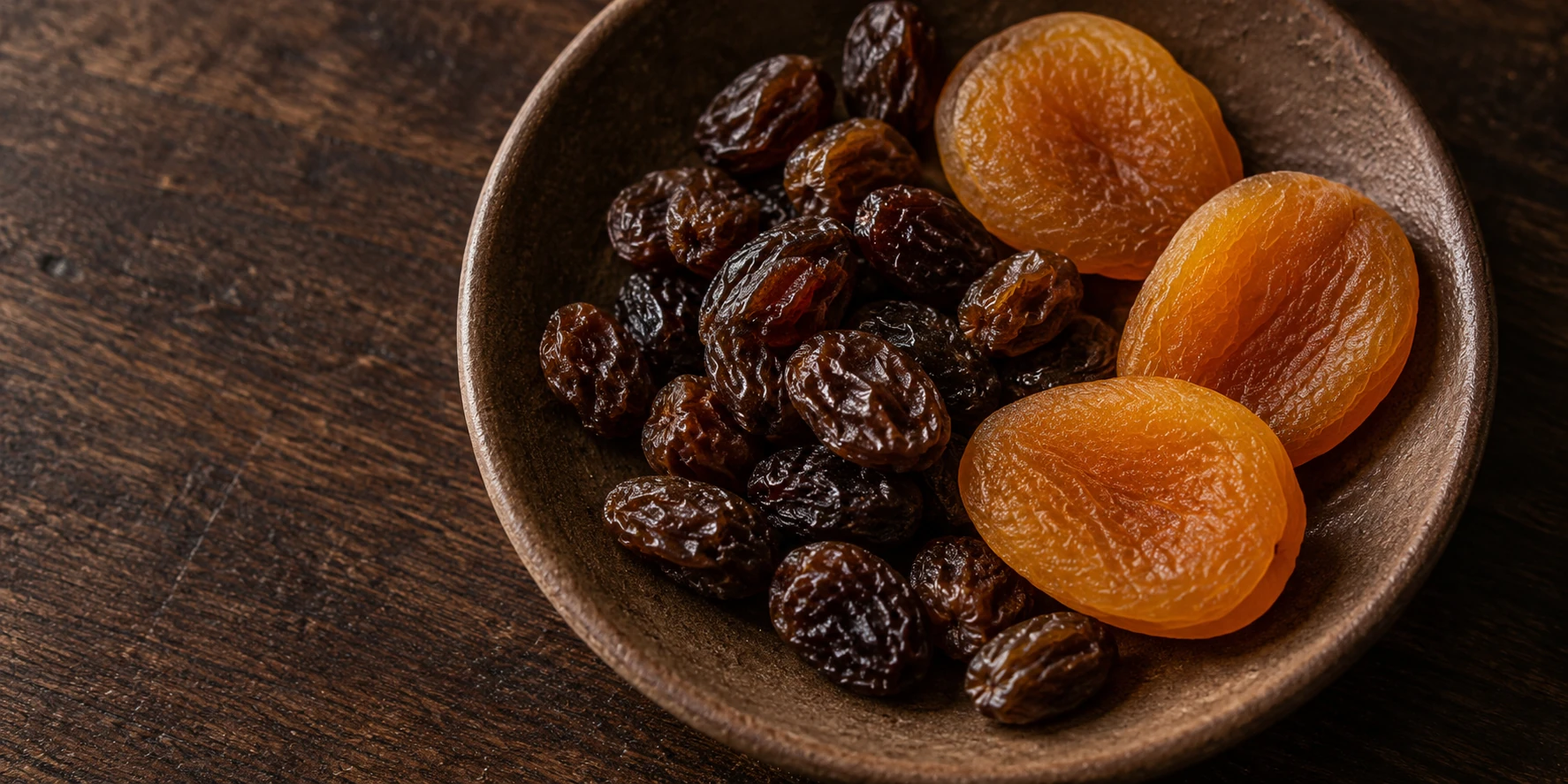
Dried fruit can count toward fruit intake. However, it contains sugar in a small volume, making it easy to eat more than intended without a set portion. The NHS gives around 30 g as an example of a dried-fruit portion. This is a nutritional serving guide, not a threshold below which decay cannot occur.[1]
Both chocolate and dried-fruit products vary in composition. Without knowing the product or how often it is eaten, it is hard to declare one universally better for teeth. Check whether the amount and timing of eating have changed, not just the name of the food.[1][3]
'No added sugar' is not the same as 'no sugar'
Sugar naturally present in fruit should be distinguished from sugar added during manufacturing. Check the ingredients for added sugar or syrup, and the nutrition information for the sugar in the amount you actually eat. A prominent fruit name on the front of a packet cannot tell you all of this.[4]
Oral bacteria use sugars and starches to produce acids. Repeated acid exposure can cause teeth to lose minerals, so naturally occurring sugar is not irrelevant to dental health. Equally, the sugar figure alone cannot calculate someone's entire risk of decay.[3]
A sticky sensation is not proof of greater decay risk
Dried fruit is often described as particularly bad for teeth because it feels sticky after chewing. A 2016 review found a shortage of high-quality direct evidence behind common assumptions about its stickiness, retention on teeth and decay risk.[2]
This does not prove that dried fruit prevents decay or can be eaten without limit. The review also called for more research into possible benefits from chewing-stimulated saliva or certain components. Insufficient evidence of harm is not the same as demonstrated safety.[2]
A practical option: include it with a meal
The NHS recommends enjoying dried fruit as part of a meal—for example, as dessert—rather than repeatedly between meals. It also suggests fresh fruit as an alternative between meals. If you enjoy dried fruit, changing the setting in which you eat it may be more useful than banning it completely.[1]
A measured portion with breakfast differs from keeping an open bag on the desk and taking a piece all morning. Decay prevention involves the frequency of acid exposure as well as the total amount eaten. Putting a portion aside instead of eating from the bag can make your habits easier to recognize.[3]
Does good brushing cancel out snacking habits?
Fluoride toothpaste and cleaning between teeth are foundations of decay prevention. They do not, however, completely offset continually eating sugary foods. Food choices and oral hygiene need to work together.[3]
If you have recurring decay or frequent dry mouth, describe a typical day's snacks and drinks as well as your brushing routine. What, when and how much you eat is more informative than saying you switched to a healthy snack. Finding a repeated pattern that challenges your teeth is more practical than dividing every food into good or bad.[3][4]
Research and institutional sources
- NHS. 5 A Day portion sizes.View source ↗NHS dietary guidance on dried-fruit portions and eating it with meals.
- Sadler MJ. Dried fruit and dental health. Int J Food Sci Nutr. 2016;67(8):944–959. doi:10.1080/09637486.2016.1207061.View source ↗Review highlighting limitations in direct evidence on food retention on teeth and decay risk.
- National Institute of Dental and Craniofacial Research. Tooth Decay.View source ↗NIDCR information on repeated sugar and acid exposure and decay prevention.
- Health Resources and Services Administration. Oral Health and Nutrition.View source ↗HRSA guidance on naturally occurring and added sugars and dietary habits.
Bracketed numbers in the text link to these sources. This article provides general health information; individual diagnosis and treatment plans are determined after a clinical consultation.