Research supports benefits—but with limits
A 2014 Cochrane review examined 56 studies comparing powered and manual toothbrushes. Powered brushes produced greater reductions in plaque and gum inflammation, with the certainty of this evidence rated moderate.[1]
How much that difference improves long-term tooth retention remained unclear, and the products and methods varied between studies. Evidence that an electric toothbrush can help is different from a claim that every model works better however it is used. If a manual brush is working well for you, the findings do not mean you must switch.[1][2]
Let the brush move; let your hand guide it
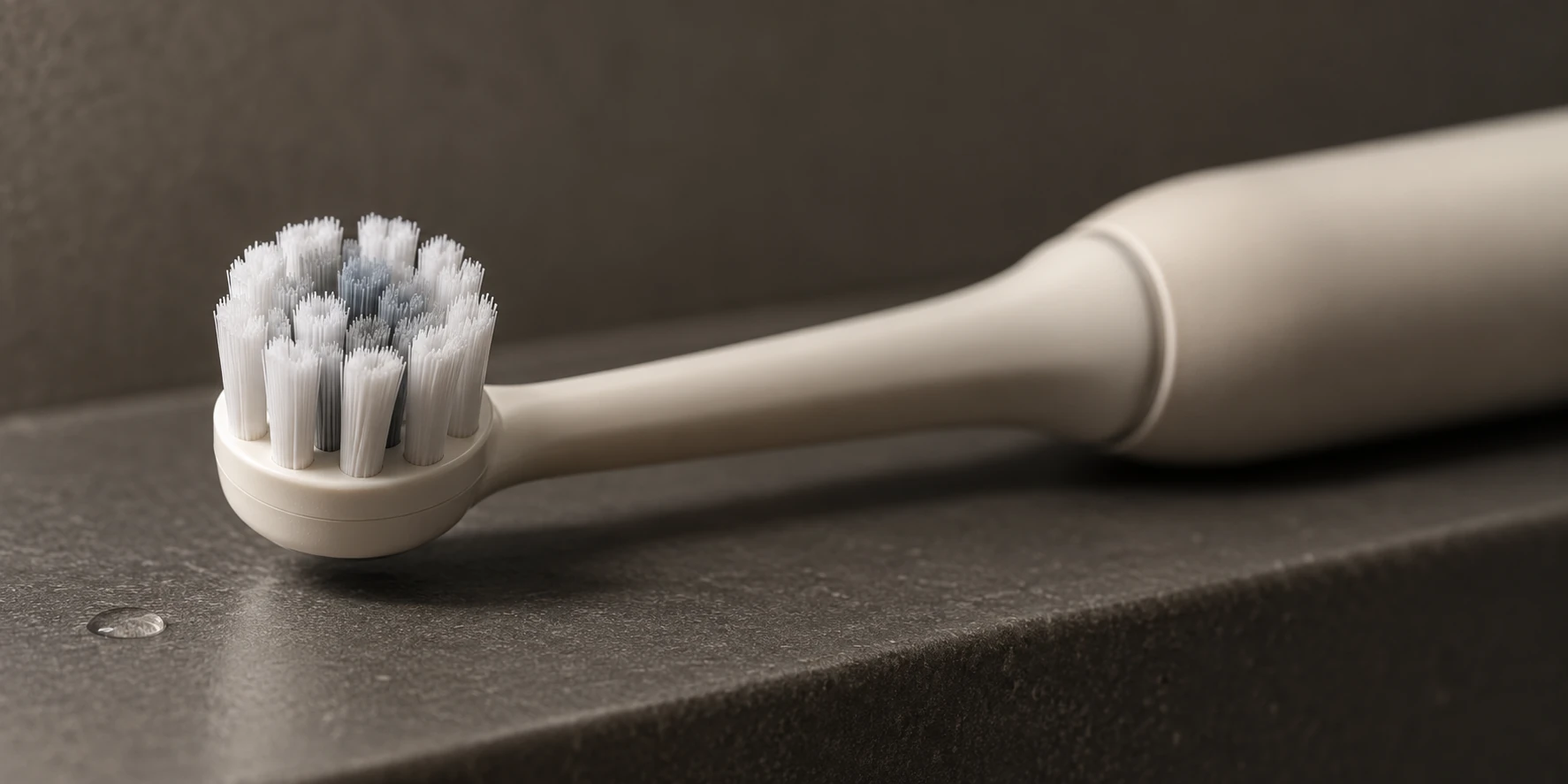
An electric brush helps clean through movement or vibration of its head. Instead of adding forceful scrubbing, pay attention to where the bristles touch and guide the brush slowly. The exact technique differs between rotating and sonic models, so check your product's instructions too.[3]
The American Dental Association recommends soft bristles and gentle pressure regardless of brush type, which may help reduce the risk of gum injury. Merely skimming the tips of the teeth while avoiding the gumline is not enough either. Learn how to position the brush at the gumline for your own mouth.[2]
Does a quiet pressure sensor mean you have cleaned everything?
Some brushes use a light or another signal to warn when you press too hard. This can be useful if you apply pressure without noticing. Check the manufacturer's instructions to understand what the signal means and how your model detects pressure.[3]
No warning does not prove that the brush has reached every tooth surface. A timer measures time; it cannot confirm that you cleaned the inside of your back teeth. Use these features as feedback on your habits, while following your own systematic route around the mouth.[2][3]
Improve your coverage, not your force
Spending too long on the outer surfaces can leave the tongue-side surfaces or the last molars neglected. Working in a consistent order around the inner, outer and chewing surfaces of the upper and lower teeth helps prevent this. General advice is to brush twice a day for about two minutes with fluoride toothpaste.[2][4]
An electric brush does not replace all cleaning between teeth. Use floss or appropriately sized interdental brushes as well, and check the head for worn or splayed bristles. Consider whether it needs replacing instead of pressing harder to compensate for wear.[2][4]
Pain after switching is not simply something to get used to
Bleeding or sensitivity during brushing cannot automatically be blamed on an electric toothbrush. Gum inflammation, an existing tooth problem and technique all need consideration. Equally, tolerating discomfort while continuing to brush hard is not good care.[2][4]
Bringing information about your brush and head can help you explain your routine at a dental appointment. Check where you apply pressure and which surfaces you repeatedly miss. More important than price or vibration settings is a method that cleans effectively and is comfortable enough to maintain every day.[3][4]
Research and institutional sources
- Yaacob M, et al. Powered versus manual toothbrushing for oral health. Cochrane Database Syst Rev. 2014;6:CD002281. doi:10.1002/14651858.CD002281.pub3.View source ↗Cochrane review comparing powered and manual brushes, including uncertainties about long-term benefits.
- American Dental Association. Toothbrushes.View source ↗ADA advice on soft bristles, gentle pressure and brush-head care.
- Oral Health Foundation. Electric toothbrushes.View source ↗Oral Health Foundation guidance on using electric toothbrushes and their features.
- NHS. How to keep your teeth clean.View source ↗NHS advice on brushing and cleaning between teeth.
Bracketed numbers in the text link to these sources. This article provides general health information; individual diagnosis and treatment plans are determined after a clinical consultation.