Whitening gel is not white paint
Conventional whitening uses peroxide compounds to act on substances that contribute to tooth color. It does not paint a white layer over the tooth. The response therefore varies with the cause and extent of discoloration.[1][2]
In particular, crowns, veneers and tooth-colored fillings do not whiten like natural teeth. As surrounding teeth become lighter, a restoration that once blended in may become more noticeable. Repeating whitening sessions alone may not resolve that difference.[2]
Surface stains and internal color changes are different
Staining from coffee or tobacco on the outside of a tooth differs from a change within it. Age, habits, past injuries and treatment can all influence tooth color. Similar-looking discoloration does not always call for the same solution.[1]
Depending on the product, a whitening toothpaste may mainly remove surface stains. Cleaning the surface and lightening color within the tooth are different effects. Look beyond the product name to the problem it is designed to address.[1][2]
First ask why one tooth is darker
If one tooth has changed color, a history of injury, decay, a large filling or root canal treatment matters. Changes in the tissues inside the tooth can contribute, but a dark appearance alone does not prove that the nerve has died.[1]
That tooth needs assessment before simply planning to whiten the whole smile further. Mention sensitivity, pain and any gum symptoms. Checking that the teeth and gums are healthy is the starting point before whitening.[4]
Would a stronger product or longer treatment help?
A 2018 Cochrane review of home-based chemical whitening found whitening effects, but insufficient evidence to identify the best combination of ingredients, concentration and application time. Evidence certainty was low or very low. These findings cannot establish one product or technique as the best choice for everyone.[3]
Tooth sensitivity and gum irritation are commonly reported adverse effects. Increasing the concentration or duration does not guarantee a better color match. Repeatedly whitening the surrounding natural teeth to match the color of a restoration that will not change may target the wrong problem.[3][4]
A natural match may matter more than the whitest shade
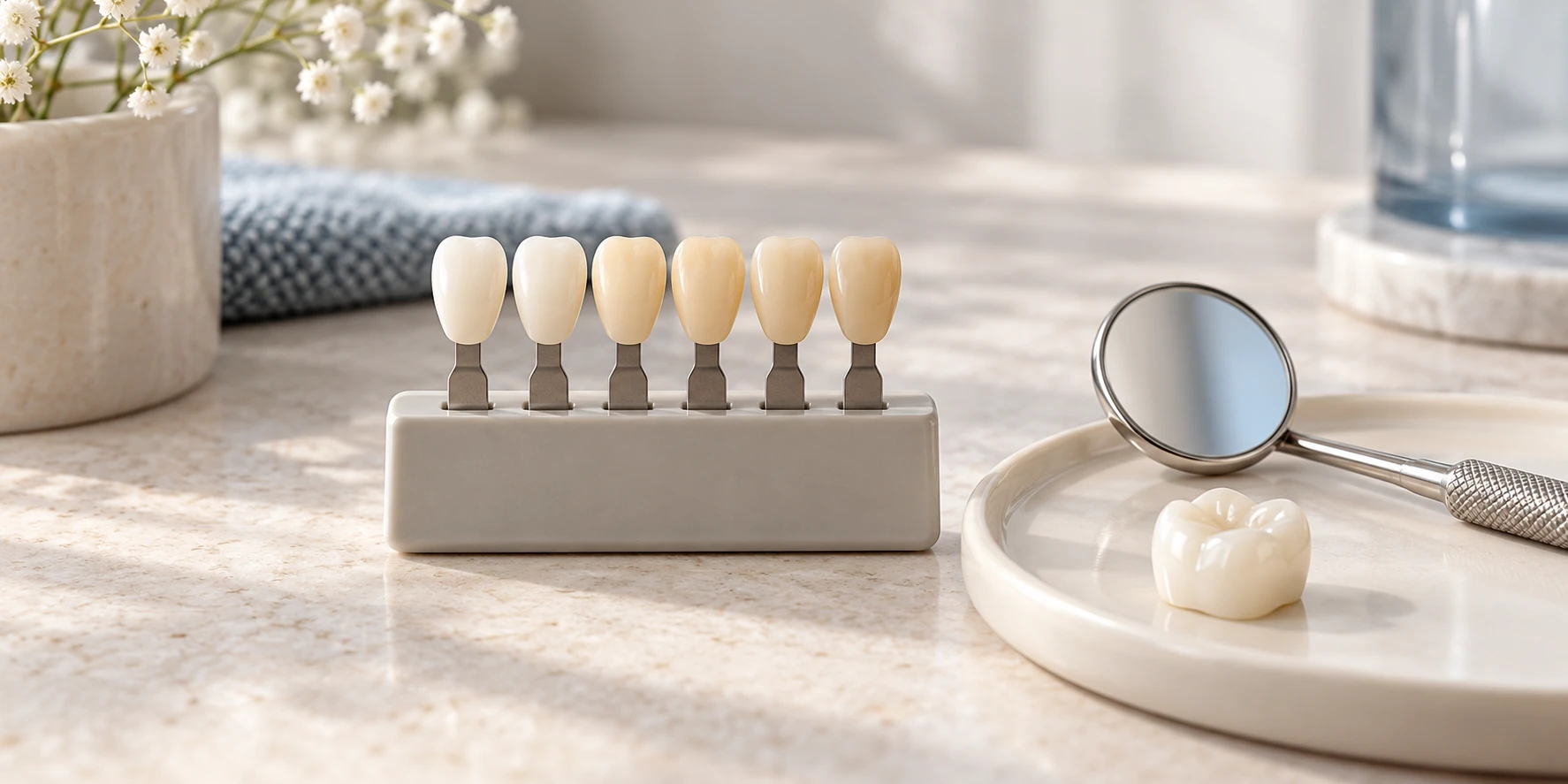
At your appointment, identify which surfaces are natural teeth, where existing restorations are, and which color difference bothers you most. If new work on front teeth is planned, discuss whitening and the order of treatment in advance. The overall color needs consideration because teeth and materials respond differently.[1][2]
A color mismatch does not mean a sound crown must be replaced. Options depend on its condition, your concerns and the change you want. Before asking “How many shades whiter?”, try “Which parts of my smile can change color, and which will stay the same?” That makes planning more realistic.
Research and institutional sources
- American Dental Association. Whitening.View source ↗Professional clinical resource: causes of discoloration, whitening mechanisms and differences in restorative materials.
- American Dental Association, MouthHealthy. Teeth Whitening.View source ↗Professional association patient information: whitening responses of natural teeth, crowns and fillings.
- Eachempati P, et al. Home-based chemically-induced whitening (bleaching) of teeth in adults. Cochrane Database Syst Rev. 2018;12:CD006202. doi:10.1002/14651858.CD006202.pub2.View source ↗Systematic review: home-whitening effects, adverse effects and limitations of comparative evidence.
- NHS. Teeth whitening.View source ↗Public health patient information: checking teeth and gums before whitening, sensitivity and gum irritation.
Bracketed numbers in the text link to these sources. This article provides general health information; individual diagnosis and treatment plans are determined after a clinical consultation.