Saliva works quietly around your teeth
Saliva washes away food particles and makes swallowing easier. It also helps buffer acids when conditions in the mouth become acidic. By supplying minerals such as calcium and phosphate, it supports the replacement of minerals lost from the tooth surface. That is one reason saliva is so important in helping the mouth recover after eating.[1] [2]
When saliva is scarce, the environment around your teeth changes even if your diet and brushing do not. Exposed root surfaces where gums have receded deserve particular attention. New cavities cannot always be explained simply as poor self-care.[2]
Feeling dry and producing less saliva are not identical
The subjective feeling of dry mouth is called xerostomia. A measured reduction in saliva production is called hyposalivation. A mouth can feel dry without saliva flow necessarily being reduced, so both symptoms and test findings matter.[3]
Temporary relief after drinking water therefore does not establish the cause. The assessment may explore when dryness began, whether it is worse by day or night, whether speaking or swallowing is uncomfortable, and whether you started a new medicine. Saliva flow may be measured when appropriate.[1]
Check your medicines before blaming age
Dry mouth is not simply an inevitable part of aging. Many medicines, including some used for high blood pressure, depression or bladder problems, can affect saliva. Other possible factors include Sjögren’s disease, diabetes and radiotherapy to the head and neck.[1]
If you take several medicines, bring their names and the dates you started them. Even if medication seems responsible, do not stop it or reduce the dose yourself; discuss alternatives with the prescriber. Mouth breathing at night because of a blocked nose can also contribute to morning dryness.[4]
When frequent sips of water are not enough
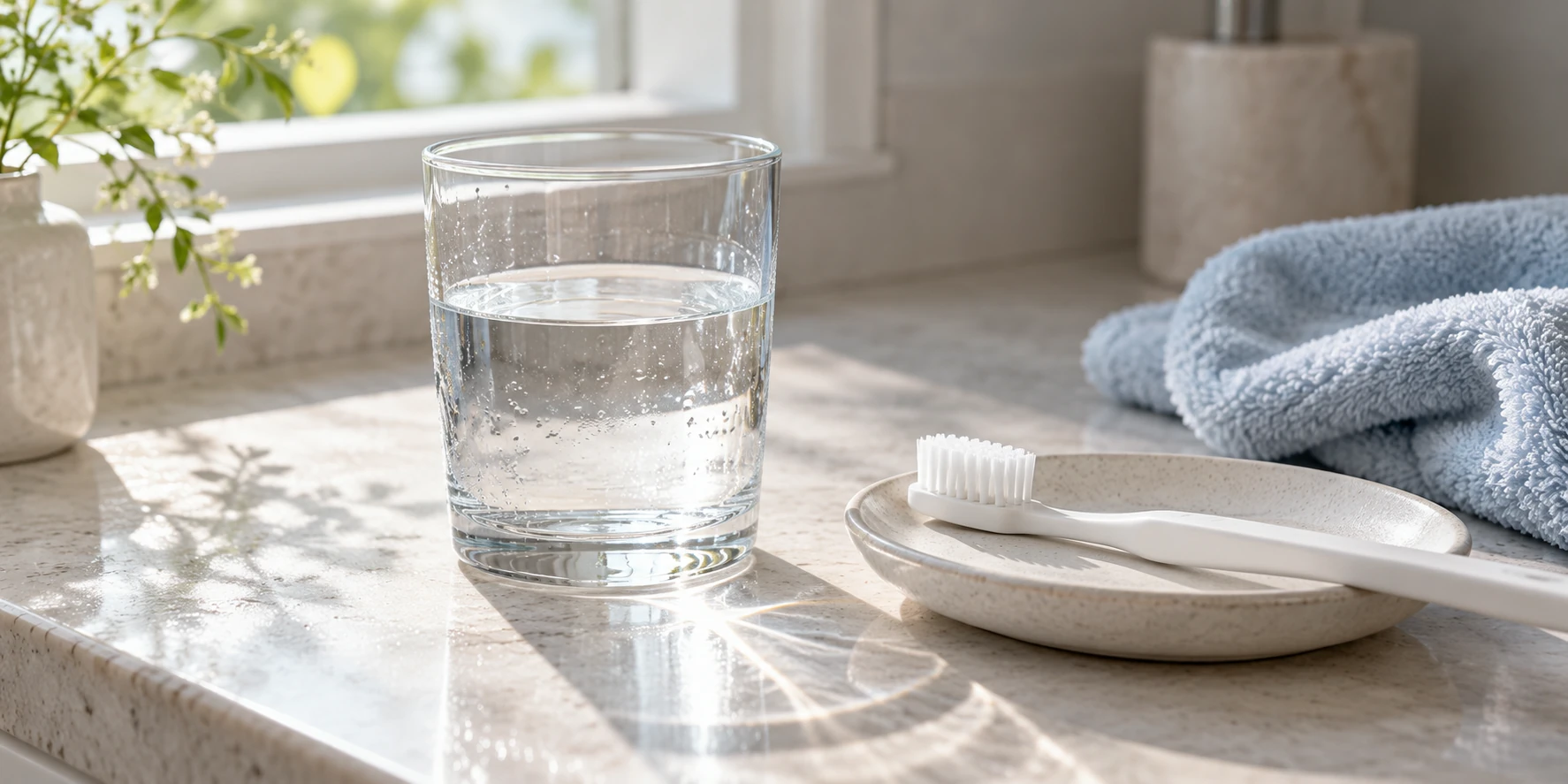
Sipping water may ease discomfort, but water cannot replace all of saliva’s functions. Keeping the mouth comfortable and protecting the teeth need to be considered together.
- Brush regularly with fluoride toothpaste: if your decay risk is high, your dentist can assess whether additional fluoride care is appropriate.[2]
- Consider a non-irritating sugar-free gum: if chewing is comfortable for you, it is one way to stimulate saliva. Saliva substitutes and other moisturizing products should be chosen according to symptoms and causes.[1]
- Be cautious about sour sweets or drinks for relief: repeatedly using acidic foods or sugary drinks to soothe dryness is best avoided.[4]
No single spray or mouthwash solves every case of dry mouth. Care should investigate the cause, reduce discomfort and help prevent cavities and soreness in the mouth.[2]
Changes worth mentioning at your appointment
Difficulty eating dry food without water, a sticky mouth when speaking, burning sensations or recurring cavities warrant assessment. Mention very dry eyes or symptoms elsewhere in the body as well as dryness in the mouth.[1] [4]
Your dentist may assess the lining of the mouth, medicines and saliva as well as teeth and gums. Rather than enduring the problem with “I just need more water,” look for both the cause and a plan to protect your teeth.
Research and institutional sources
- National Institute of Dental and Craniofacial Research (NIDCR). Dry Mouth. Last reviewed October 2024.View source ↗Public health information: saliva’s functions, causes of dry mouth, assessment and management.
- American Dental Association (ADA). Xerostomia (Dry Mouth).View source ↗Professional guidance: cavity risk, prevention and the limitations of treatment.
- Villa A, Connell CL, Abati S. Diagnosis and management of xerostomia and hyposalivation. Therapeutics and Clinical Risk Management. 2015;11:45–51. doi:10.2147/TCRM.S76282.View source ↗Review: distinguishing subjective dryness from objectively reduced saliva production.
- National Health Service (NHS). Dry mouth.View source ↗Public health information: everyday care and symptoms that warrant an appointment.
Bracketed numbers in the text link to these sources. This article provides general health information; individual diagnosis and treatment plans are determined after a clinical consultation.