Bruxism is not always noisy grinding
The word “grinding” tends to bring to mind teeth rubbing against each other. In research, however, bruxism covers a wider range of chewing-muscle activity, including grinding, clenching and bracing the jaw. Those muscles can be active without the teeth making a loud sound.[1]
A 2025 international expert consensus likewise does not define bruxism simply as a noisy habit. It distinguishes activities such as sustained tooth contact and jaw bracing while awake. Noticing these behaviors does not, by itself, mean that everyone has a disorder or needs treatment. Symptoms and actual damage matter.[1][2]
Asleep and awake are different contexts
Sleep bruxism occurs during sleep; awake bruxism occurs while you are awake. These are not interchangeable names for the same situation. Activity during sleep may go unnoticed, and daytime clenching may only become apparent after it has been happening for some time.[1][2]
You might suddenly notice that your back teeth are pressed together while you concentrate on work. Sharing that observation at an appointment can help. On the other hand, an aching jaw in the morning alone cannot show that you spent the night grinding.
Jaw soreness does not have just one cause
Discomfort can involve the chewing muscles, jaw joints or other structures. Stress is one factor to explore, but “You are just sensitive” is not an adequate explanation. The location and timing of pain, the way the jaw moves when opening, and the condition of the teeth should be considered together.[3]
A joint that clicks without pain is different from a jaw that is difficult to open because it hurts. Painless clicking is common and does not, by itself, require treatment. Repeated pain, restricted opening or a catching sensation, however, warrants an assessment.[3]
The assessment includes your daily pattern
Your dentist will look for damage to teeth or restorations, assess muscle discomfort and ask when symptoms occur. Sleep may also be considered. Not everyone needs a sleep study; it is an option when sleep-related muscle activity or another sleep problem needs investigation.[2]
A short record of the following can help the discussion.
- Whether soreness is present on waking or worse later in the day
- Whether you catch yourself clenching while concentrating
- Any newly sensitive or broken teeth
- Recent changes in sleep habits, medication, caffeine or alcohol intake
Mention snoring or breathing problems during sleep as well. Bruxism and sleep problems can occur together, but bruxism alone does not diagnose sleep apnea.[4]
Start by noticing when you tense your jaw
If you clench during the day, a phone reminder or a small note can prompt the question: “Am I pressing my back teeth together right now?” When you notice it, practice letting your jaw rest comfortably rather than holding the teeth tightly together. This is different from repeatedly opening wide or forcefully stretching the jaw.[2]
You can also check whether you go to bed at a regular time and have ways to unwind before sleep. Reduce excessive caffeine and alcohol, and avoid repeated gum chewing or hard foods while your jaw hurts. If you suspect a medicine is involved, discuss it with the prescriber rather than stopping it yourself.[4]
Will a night guard solve the problem?
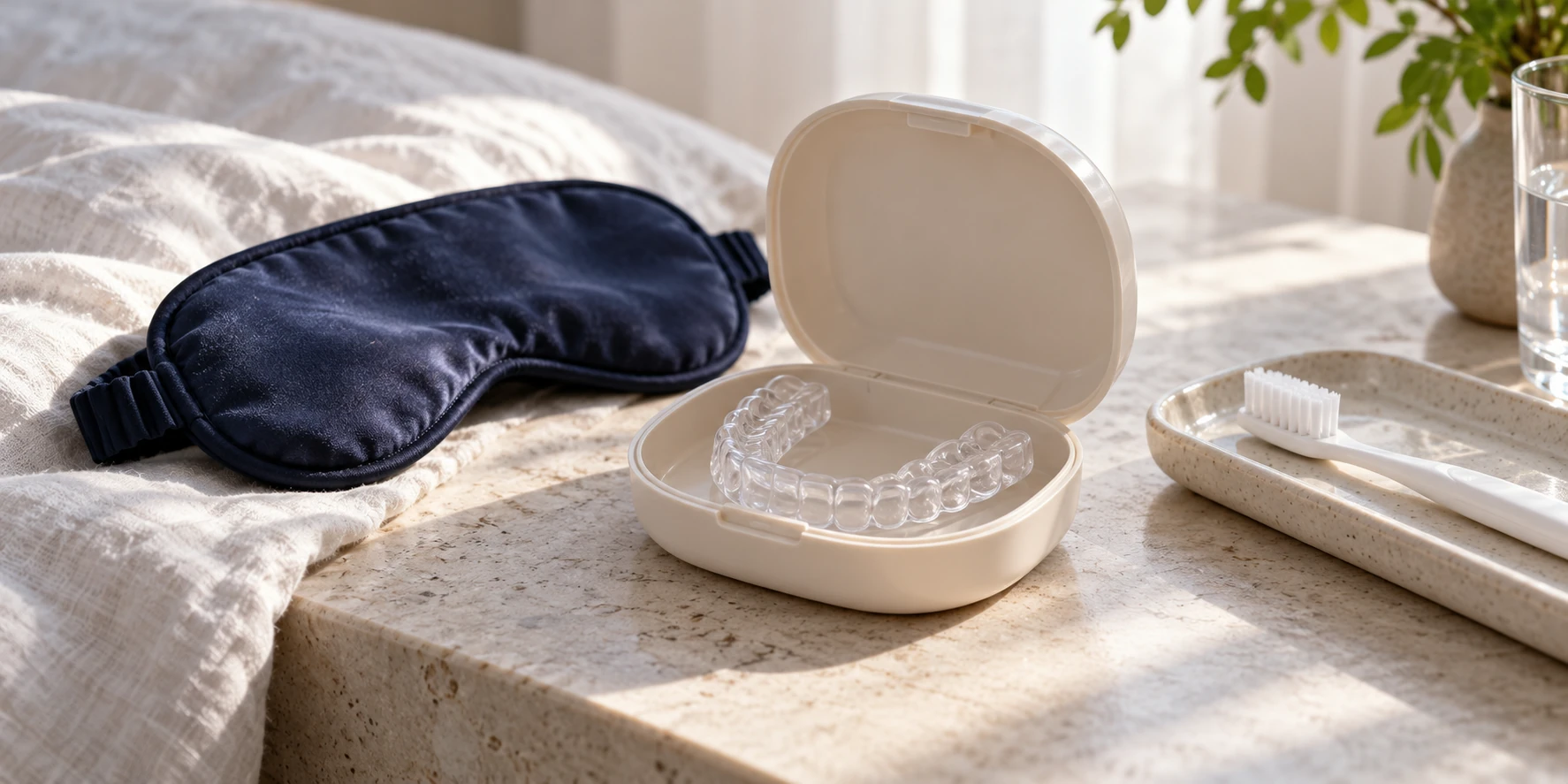
A dentist-fitted oral appliance, often called a splint or night guard, may be used to help limit tooth damage when appropriate. Protecting teeth and relieving jaw pain are different goals. Evidence for appliances in treating temporomandibular disorder pain is limited, and responses vary.[3][4]
That is why it is best not to simply buy a device that looks like the one in the photo and start wearing it. Check whether it suits your teeth and symptoms. If it causes pain, stop using it and seek advice. Initial management of jaw discomfort generally favors less invasive, reversible approaches before treatments that permanently change the teeth or bite.[3]
Research and institutional sources
- Verhoeff MC, et al. Updating the Bruxism Definitions: Report of an International Consensus Meeting. J Oral Rehabil. 2025;52(9):1335–1342. doi:10.1111/joor.13985.View source ↗International expert consensus: definitions of sleep and awake bruxism and distinctions in muscle activity.
- National Institute of Dental and Craniofacial Research (NIDCR). Bruxism.View source ↗Public health information: symptoms, assessment, habit awareness and tooth protection.
- National Institute of Dental and Craniofacial Research (NIDCR). TMD (Temporomandibular Disorders).View source ↗Public health information: assessment of temporomandibular disorders, conservative care and the limitations of appliances.
- NHS. Teeth grinding (bruxism). Reviewed April 8, 2026.View source ↗Public health patient information: sleep, everyday habits and when to seek care.
Bracketed numbers in the text link to these sources. This article provides general health information; individual diagnosis and treatment plans are determined after a clinical consultation.