There is more than a nerve inside a tooth
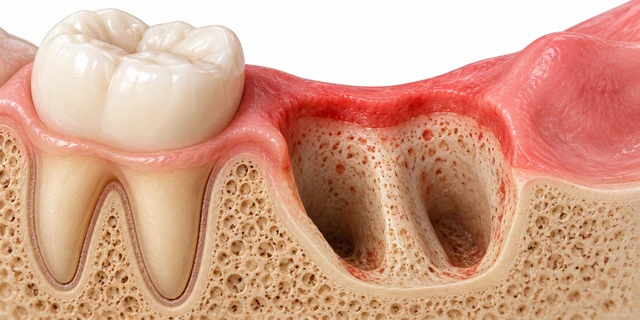
Inside the hard outer layers of a tooth is soft tissue containing nerves and blood vessels. This is the dental pulp. People often describe pain as coming from the “tooth nerve,” but the dentist is assessing the condition of this whole tissue. Deep decay, cracks and other damage can affect it.[1][2]
A brief twinge with cold water and pain that lingers after the cold is gone are assessed differently. Still, how many seconds the pain lasts is not enough to diagnose the problem at home. Several different problems can feel like the same sharp twinge.[2]
An examination can help explain why the pain stopped
The irritation may have eased, or temporary discomfort may have settled. In other cases, damaged pulp is no longer responding normally. When the tissue dies, the condition is called pulp necrosis; the tooth often stops responding to pulp tests.[3]
Pulp disease can also be classified as asymptomatic, meaning it causes no symptoms. In other words, pain—or its absence—cannot establish whether the tissue is healthy. Neither “It has stopped hurting, so it is healed” nor “It suddenly stopped hurting, so the nerve must be dead” is a conclusion to draw without an examination.[3]
The tissues around the root may still have a problem
The pulp inside the tooth and the tissues around its root are assessed separately. A tooth whose pulp no longer responds normally may still hurt when you bite or when it is gently tapped if the surrounding tissues are inflamed. Conversely, inflammation around the root may cause little noticeable pain.[3]
Tell your dentist if a pimple-like bump on the gum appears and shrinks, or if pus drains from it from time to time. Drainage may relieve pressure without resolving the underlying cause. The American Association of Endodontists’ diagnostic terminology includes a chronic infection that can drain pus while causing little or no discomfort.[3]
Your dentist needs the history, not just how it feels today
A dental assessment considers what happened before the appointment as well as your current symptoms: when the pain began, whether it occurred on its own, and how the tooth responded to cold, heat or biting pressure. Depending on the situation, the dentist may assess its response to cold, gently tap the tooth and examine dental X-rays.[4]
A paper explaining the European Society of Endodontology’s guidelines also emphasizes bringing the history and clinical findings together. A single test response should not automatically become the final diagnosis; information about the tooth and its surrounding tissues needs to be considered as a whole.[4]
- When the pain began and when it eased
- Whether it woke you at night or occurred without a trigger
- Any discomfort on biting, gum swelling or pus
- Painkillers you took and recent dental treatment
A short note covering these points can communicate what “It feels fine today” might leave out.
Treatment depends on the condition of the tooth, not just how much it hurts
Less pain does not automatically mean treatment is unnecessary. Equally, severe pain in the past does not automatically mean root canal treatment is needed now. Depending on the condition of the pulp and the extent of damage, treatment to preserve living tissue may be considered, or root canal treatment may be needed to clean the infected interior.[4]
Root canal treatment is not simply a way to stop a tooth from sensing pain. It involves cleaning and filling the inside of an infected tooth to help prevent reinfection. The goal goes beyond temporarily masking symptoms.[1]
Changes that should not wait
If you have had a severe toothache, tell your dental team how it changed and ask whether you need an appointment, even if it now hurts less. Swelling of the face or jaw, fever, pus or an unpleasant taste, and difficulty opening your mouth or chewing require prompt assessment for infection. A dental abscess—a collection of pus in or around a tooth or gum—is not something to expect to resolve on its own.[5]
Difficulty breathing, swallowing or speaking, or swelling around the eye, requires emergency care. Seek immediate assessment at an emergency department rather than waiting for a routine appointment. Do not simply watch worsening swelling because painkillers have made it feel less uncomfortable.[5]
Research and institutional sources
- NHS. Root canal treatment.View source ↗Public health patient information: pulp infection and the purpose of root canal treatment.
- American Association of Endodontists (AAE). Tooth Pain.View source ↗Specialist association patient information: pain patterns and their possible causes.
- American Association of Endodontists. AAE Consensus Conference Recommended Diagnostic Terminology. J Endod. 2009;35(12):1634.View source ↗Professional diagnostic consensus: distinctions between pulpal and periapical conditions, asymptomatic disease and chronic abscess.
- Duncan HF, El-Karim I. Endodontic S3-level clinical practice guidelines: the European Society of Endodontology process and recommendations. Br Dent J. 2025;238:580–586. doi:10.1038/s41415-025-8335-x.View source ↗Clinical guideline commentary: combining the history and test findings, and selecting treatment for pulpal and apical disease.
- NHS. Dental abscess. Reviewed March 18, 2026.View source ↗Public health patient information: signs of infection and when prompt or emergency assessment is needed.
Bracketed numbers in the text link to these sources. This article provides general health information; individual diagnosis and treatment plans are determined after a clinical consultation.