Why can sinus inflammation feel like toothache?
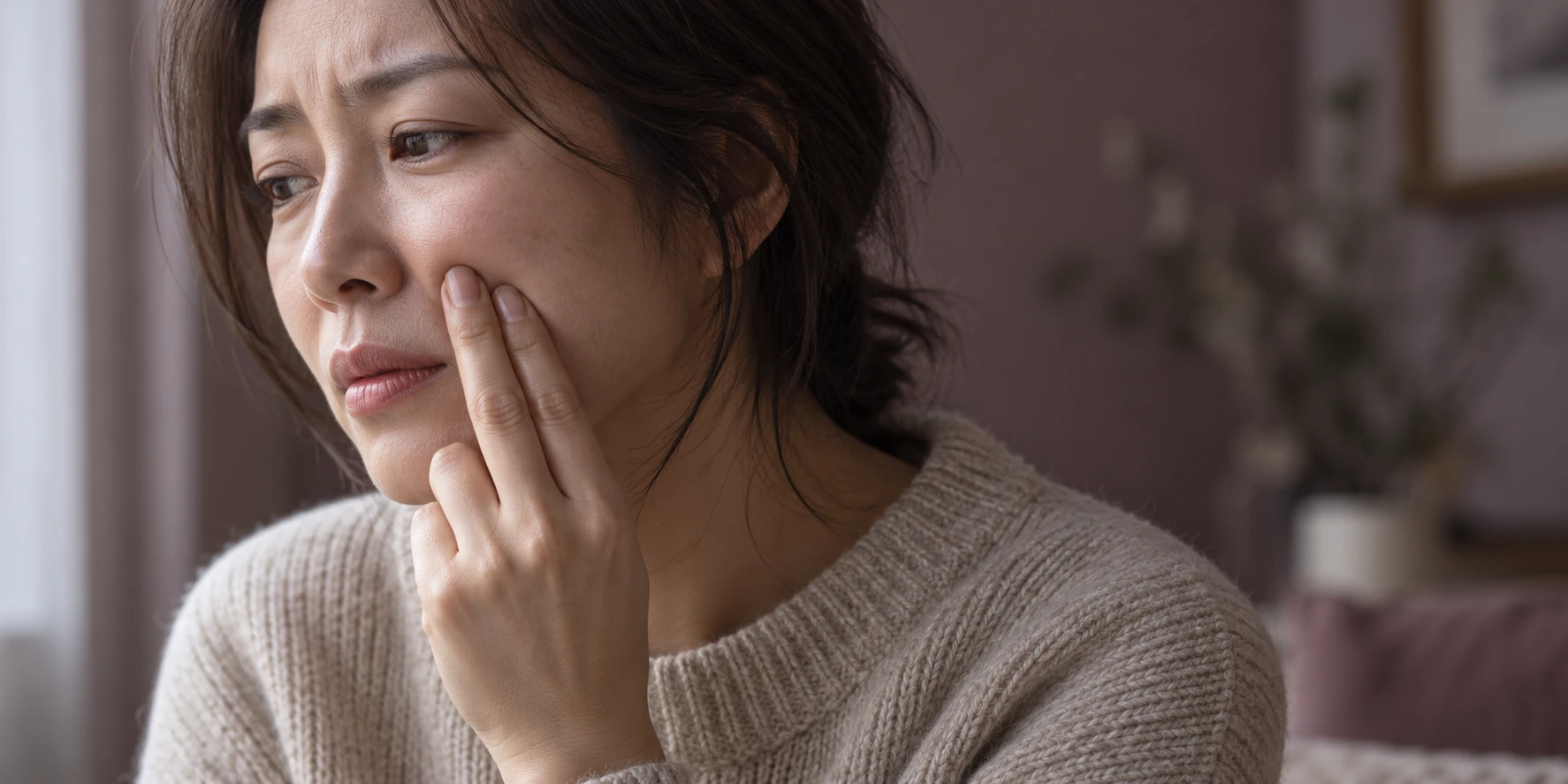
The sinuses are air-filled spaces in bones around the nose. The maxillary sinuses behind the cheeks lie close to the roots of upper molars. Inflammation there can produce pain or pressure around nearby teeth; toothache is a recognized symptom of sinusitis.[1][2]
Pain in an upper molar therefore does not necessarily mean damage to its pulp. Explain whether nasal congestion, discharge or facial pressure accompanied the onset. Equally, starting at the same time as a cold does not rule out a dental problem.[1]
A nasal problem can start in a tooth too
Infection around an upper molar's root can affect the maxillary sinus and cause odontogenic sinusitis—sinusitis of dental origin. Because the cause differs from ordinary post-cold sinusitis, treating nasal symptoms alone may not be enough. The responsible tooth may need treatment too.[3]
A foul smell on one side of the nose or persistent, recurring one-sided symptoms can be a clue to check the teeth, though neither proves dental-origin sinusitis. A dental source may also exist without much tooth pain.[3]
Tapping your teeth at home cannot reliably distinguish the cause
Whether biting hurts one tooth, hot or cold triggers pain, or several upper molars ache together is useful information. No single symptom, however, can establish decay, pulp inflammation or a sinus problem. There is no need to test a painful tooth by hitting or repeatedly provoking it.[1][4]
A dentist combines examination of the teeth and gums, pulp responses and appropriate imaging. An international consensus describes the complementary roles of dental confirmation of a tooth source and ENT confirmation of sinusitis. In other words, the cause of pain is not determined by an X-ray or CT scan alone; symptoms and findings from dental and ENT examinations are considered together.[4]
Temporary improvement with antibiotics does not prove the cause is gone
Many acute sinus infections are viral, so antibiotics are not always needed. Conversely, dental-origin sinusitis often cannot be resolved by antibiotics alone when a treatable tooth infection remains. Repeating the same medicine cannot address every different cause.[2][3]
Rather than taking leftover antibiotics or choosing between dental and nasal treatment yourself, tell both teams about previous care and medicines. Both the dental source and sinus disease may require treatment, with the sequence guided by symptoms and findings.[3]
When not to wait for the cold to pass
Seek dental assessment if toothache persists after nasal symptoms improve, concentrates in one tooth or accompanies swollen gums. Worsening pain that disrupts eating or sleep warrants earlier care. Nor should a painful tooth automatically be extracted or receive root canal treatment before the cause is established.[1]
Swelling around the eye, altered vision, severe facial swelling or deterioration in general health requires prompt care. Difficulty breathing or swallowing calls for emergency services—119 in South Korea. Without these warning signs, dental assessment and referral where needed are a practical starting point.[3]
Research and institutional sources
- Mayo Clinic. Sinus infection and toothache: Any connection? 2023.View source ↗Clinical information on the relationship between maxillary sinuses and upper molars.
- NHS. Sinusitis (sinus infection).View source ↗NHS guidance on sinusitis symptoms and treatment.
- Craig JR. Odontogenic sinusitis: A state-of-the-art review. World J Otorhinolaryngol Head Neck Surg. 2022;8(1):8–15. doi:10.1002/wjo2.9.View source ↗Review of dental-origin sinusitis, management and complications.
- Craig JR, et al. Diagnosing odontogenic sinusitis: An international multidisciplinary consensus statement. Int Forum Allergy Rhinol. 2021;11(8):1235–1248.View source ↗Multidisciplinary consensus on the diagnostic roles of dentistry and ENT.
Bracketed numbers in the text link to these sources. This article provides general health information; individual diagnosis and treatment plans are determined after a clinical consultation.