The gap in “No sugar means safe”
Tooth decay involves acids produced when oral bacteria use sugars. The concern with ice chewing is mainly the mechanical force of breaking a hard object. Whether something contributes little to decay and whether it is safe to bite forcefully are different questions.[1][2]
The ADA warns that crunching ice can break teeth or fillings. This does not mean one bite damages everyone’s teeth. But having had no problem so far does not guarantee future safety. Mention the habit during check-ups, particularly if you have restored teeth.[1]
Cold sensitivity and crunching ice are not the same problem
Teeth can react to cold for several reasons. A brief twinge with iced water does not automatically mean a crack. Equally, the absence of an obvious broken area is not a reason to ignore discomfort.[3]
A cracked tooth may hurt on biting or releasing pressure, or react to hot and cold. Intermittent symptoms can make it difficult to identify the tooth. Recording when it hurts and what you are doing at the time helps the assessment.[3]
A simpler choice than switching to crushed ice
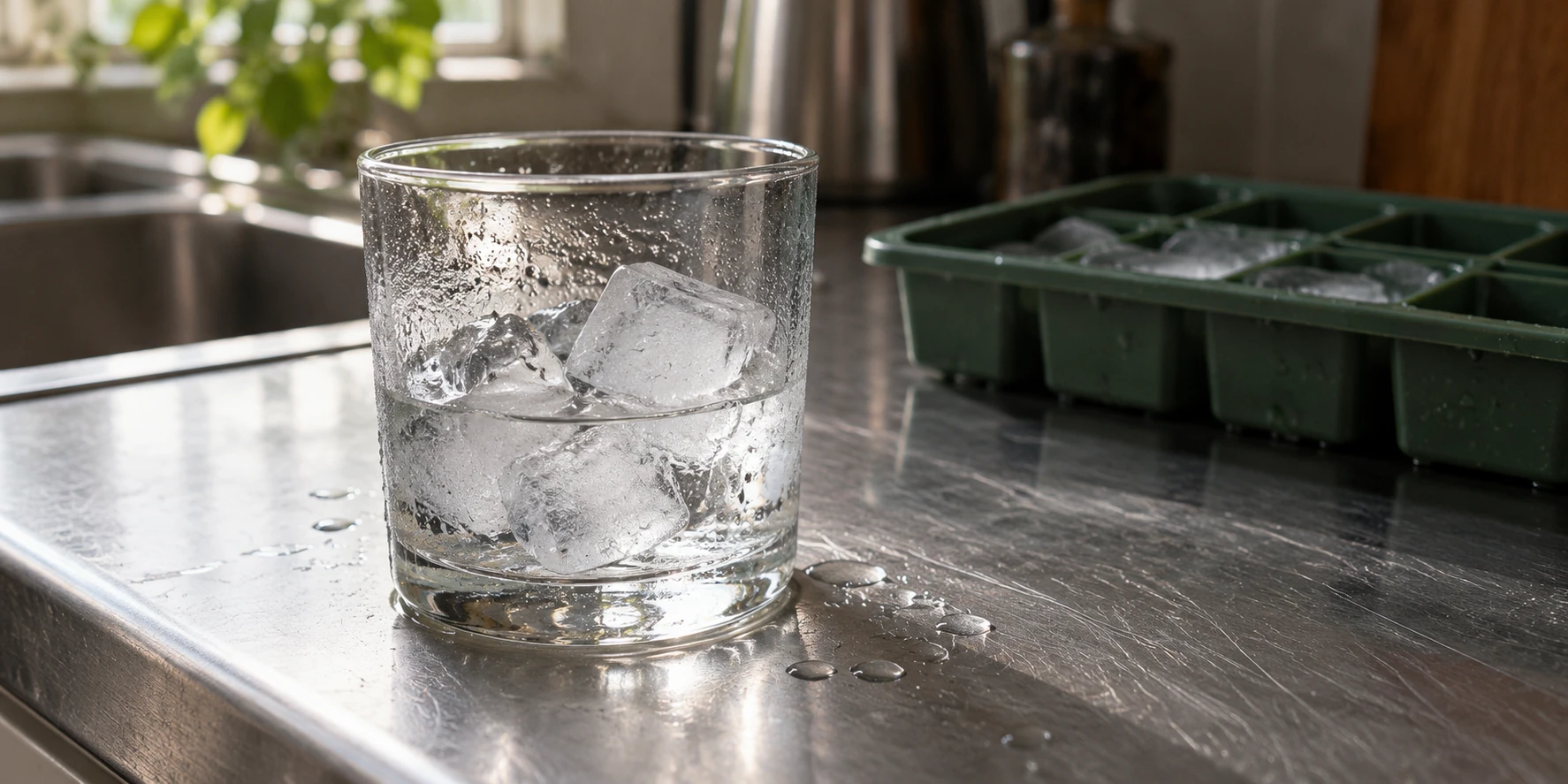
Using smaller pieces or chewing on another tooth does not remove the hard-biting habit. Instead of looking for a better way to crush ice with your teeth, separate enjoying a cold drink from chewing. Chilled water without ice is one option.[1]
If you absent-mindedly eat the remaining ice, putting the cup away once the drink is finished may help. Keep water as your default rather than replacing ice with sweet or fizzy drinks. A change in habits should consider both hardness and how often sugary drinks are consumed.[2]
A strong craving for ice may be more than a matter of willpower
Some people repeatedly seek ice beyond ordinary thirst and find the urge difficult to resist. A review of this behavior describes a frequent association between strong ice cravings and iron deficiency. Occasional ice chewing and a persistent craving should not be treated as equivalent.[4]
If the urge interferes with daily life or accompanies other changes in health, talk to a physician (for example, in internal medicine). Iron deficiency is assessed through history and appropriate testing, not an eating habit alone. Do not start iron supplements or change existing medication solely because you crave ice.[4]
If you have already felt a crack or snap
If a tooth seems chipped, develops a rough edge or hurts after biting, contact your dentist rather than repeatedly testing the same spot. A small chip and a deep crack differ in both condition and treatment. Appearance and pain intensity alone cannot determine the extent of care needed.[3]
The dentist assesses the location, existing fillings and response to biting to decide on treatment. Not every case requires a crown or root canal treatment. A good starting point is to stop testing how much the tooth can withstand and reduce the repeated force in your routine.[3]
Research and institutional sources
- American Dental Association, MouthHealthy. 6 Habits That Harm Your Teeth (And How to Break Them).View source ↗Professional association patient information: damage to teeth and fillings from ice chewing.
- Health Resources and Services Administration. Oral Health and Nutrition.View source ↗Public health information: eating habits and oral health.
- American Association of Endodontists. Cracked Teeth.View source ↗Specialist association patient information: crack symptoms and treatment according to the condition.
- Rabel A, Leitman SF, Miller JL. Ask about ice, then consider iron. J Am Assoc Nurse Pract. 2016;28(2):116–120. doi:10.1002/2327-6924.12268.View source ↗Literature review: the association between strong ice cravings and iron deficiency.
Bracketed numbers in the text link to these sources. This article provides general health information; individual diagnosis and treatment plans are determined after a clinical consultation.