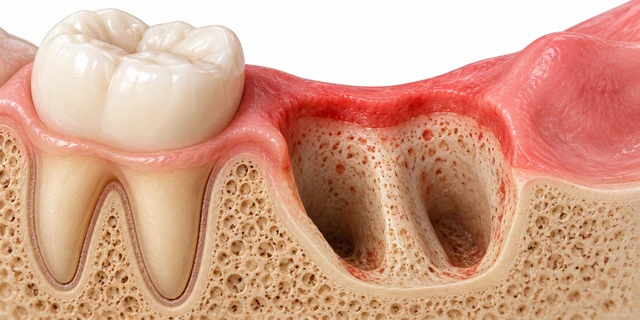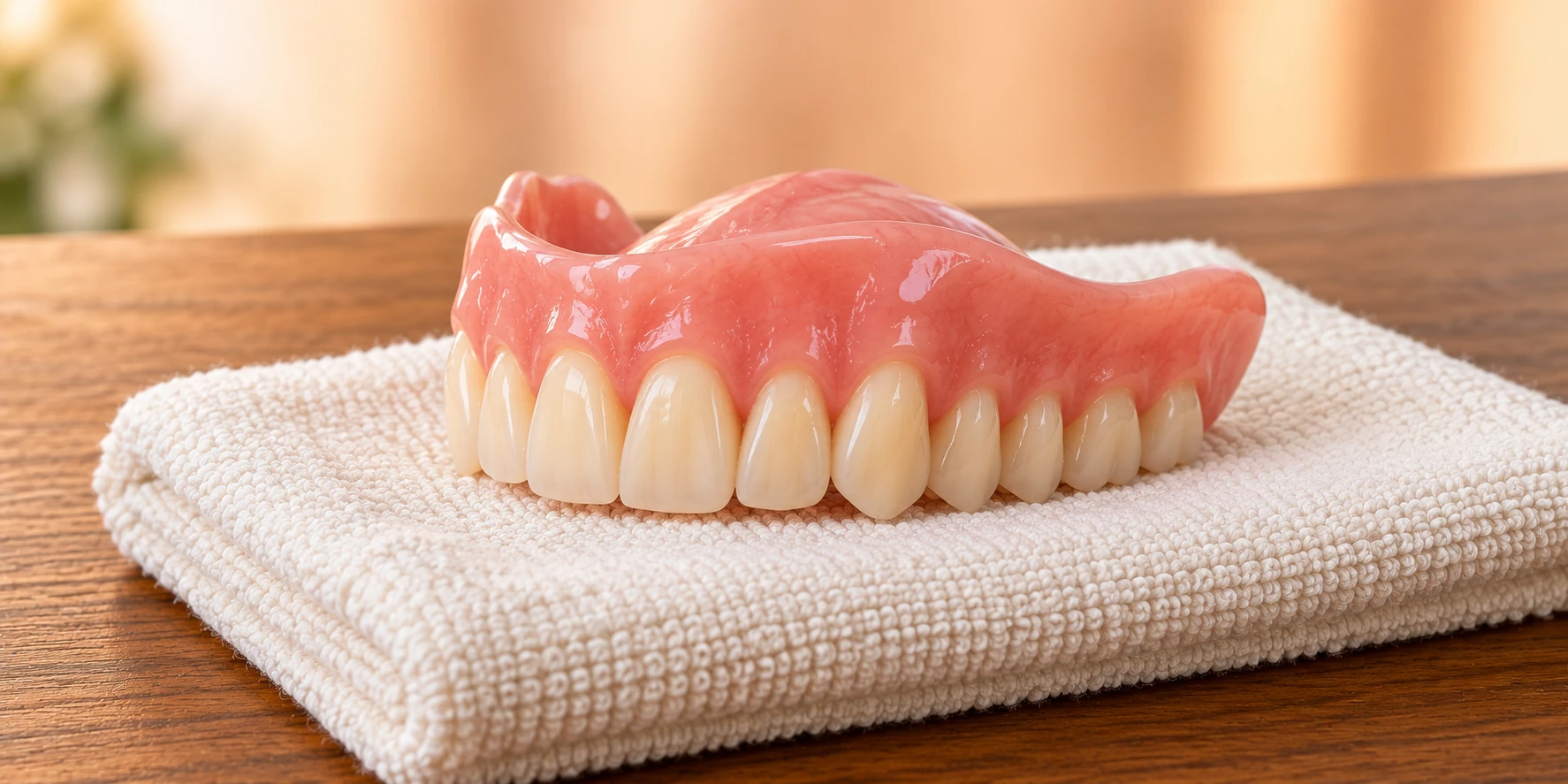
Losing your teeth does not remove the bacteria in your mouth
Bacteria remain in your mouth after all your natural teeth are gone. Microorganisms also form a layer on dentures, called a biofilm. That is why daily cleaning matters even when you cannot see food debris.[1]
Cleaning your dentures and cleaning your mouth are separate tasks. The American Dental Association (ADA) recommends gently brushing the gums, tongue and palate even if you wear complete dentures.[2]
Remove your dentures, then gently clean your gums and tongue
Take your dentures out to clean your gums and tongue in the morning and evening. Check and gently clean your palate and inner cheeks with a soft toothbrush or gauze. If you use denture adhesive, remove any that remains on your gums.[3][4]
Be gentle and thorough rather than scrubbing hard. Do not apply more pressure to sore or injured gums. If you still have some natural teeth, brush them separately with fluoride toothpaste.[3][5]
Denture cleanser is not a mouthwash
Soaking your dentures does not clean your mouth. Use denture cleansers only on dentures outside the mouth. Do not rinse your mouth with the solution, and rinse your dentures thoroughly before putting them back in.[1]
Use a soft brush and a cleanser suitable for your denture material. Avoid ordinary toothpaste on dentures because it can damage their surface. Follow the product instructions for dilution and soaking time.[1][3]
Persistent soreness may be more than a cleaning problem
A loose denture or one that repeatedly presses on the same spot can cause sores. Redness and pain do not always mean you have been cleaning poorly. Your dentist needs to check the fit and look for inflammation or infection.[3][4]
Contact Gangbuk Baeksang Dental Clinic if sores keep returning or pain gets worse. Have a mouth ulcer checked if it lasts longer than three weeks. Do not wait three weeks if it bleeds or becomes increasingly red and painful.[5]
You still need checkups when you have no natural teeth
A denture checkup is about more than broken artificial teeth. It also assesses the fit and the tissues beneath your dentures and around your tongue. The American College of Prosthodontists (ACP) recommends regular reviews for denture wearers. Your dentist can recommend how often you need a checkup.[1][4]
When you clean your dentures today, check your mouth too. If your dentures look clean but your gums still hurt, tell us exactly that. Explaining where it hurts and when the discomfort began helps us assess the problem.
Research and institutional sources
- Felton D, Cooper L, Duqum I, et al. Evidence-based guidelines for the care and maintenance of complete dentures: a publication of the American College of Prosthodontists. J Prosthodont. 2011;20 Suppl 1:S1–S12. doi:10.1111/j.1532-849X.2010.00683.x. PMID:21324026.View source ↗A guideline based on a literature review. Recommendations on biofilm removal, cleanser use and regular reviews were checked. The strength of evidence varies between recommendations.
- American Dental Association. MouthHealthy: Dentures.View source ↗Patient information on cleaning the gums, tongue and palate with complete dentures. No publication or revision date is displayed.
- NHS. Dentures (false teeth). Last reviewed 19 March 2025.View source ↗Public health patient guidance on morning and evening mouth care, denture cleaning and symptoms needing a dental visit.
- Mayo Clinic Staff. Denture care: How do I clean dentures? 19 January 2024.View source ↗Patient guidance on soft brushes or gauze, removing adhesive residue and checking poorly fitting dentures.
- NHS. Mouth ulcers. Last reviewed 11 March 2024.View source ↗Patient guidance on sores caused by dentures or brushing, ulcers lasting longer than three weeks, and worsening symptoms.
Bracketed numbers in the text link to these sources. This article provides general health information; individual diagnosis and treatment plans are determined after a clinical consultation.